Growing Mulberry In Florida

How To Grow A Mulberry Tree In Florida

How to grow a mulberry tree in Florida

Are you considering growing a berry in your yard but are stuck on which one? Look no further – Mulberry is the berry that your garden needs.

Mulberry is a delicious fruiting tree that produces black berries that taste sweet to the palate. The Mulberry is part of the Moraceae plant family, which is also family to the tasty jackfruit, fig, and breadfruit – no wonder this fruit is delicious!

Recommended Products At Amazon For Growing Mulberries:

How To Grow A Mulberry Tree In Florida
Thai-Dwarf Mulberry Producing In Florida

Mulberry Tree Care Guide

Common namesMulberry
Scientific nameMorus nigra (Black mulberry), Morus rubra (Red mulberry), Morus alba (White mulberry)
Months of mulberry harvest in FloridaLate March / Early April through November
Sun requirements for mulberriesFull sun to partial shade
Water requirements for mulberriesWater once to twice a week during the growing and fruiting season. Water should increase as the mulberry tree is flowering and fruiting.
Soil requirements for mulberriesWell-drained, loamy, nutrient-rich soil. Sandy soil works just fine.
Fertilizer schedule for mulberriesMulberry trees should be fertilized 2 to 3 times per year. Osmocote + 15-9-12 is our recommended fertilizer for mulberries.
Mulberry pestsMealybugs, root-knot nematodes, whiteflies
Mulberry diseasesCanker, Powdery Mildew, Root-Rot
Mulberry care guide updated: November 30, 2022

Where Should I Plant My Mulberry Tree?

If you plan on growing this fruit tree in Florida, select an area where it will receive plenty of sunlight.

The mulberry plant is also found growing in the wild under the shade of taller trees – so ideally, it could still grow in part shade.

A tip for home gardeners growing Mulberry is taking into account that when the berry falls off when ripe, it can stain your driveways, sidewalks, concrete, etc. Planting the Mulberry away from concrete surfaces is better to decrease staining.

You can order the Mulberry plant perfect for your garden or patio here. Mulberry can grow well in the hardy zones 7-9 or indoors with sufficient lighting and heat.

Which parts of Florida can mulberry trees grow in?

Mulberry trees can grow and produce fruit in North, Central, and South Florida.

What Type Of Soils Do Mulberry Like?

Mulberry trees prefer deep, moist soils but can tolerate many soils in Florida, such as ordinary sand soil. Mulberries also adapt well to native soils.

The Types of Mulberry Available

There are 150 varieties of Mulberry, but only about ten have grown in popularity for use in the garden.

Three types of Mulberry are widely grown across the United States and Florida, are the Red Mulberry (Morus rubra), White Mulberry (Morus alba), and Black mulberry (Morus nigra).

Mulberry varieties you can get in Florida

In Florida, the varieties of mulberries available at nurseries are

  • ‘Pakistan’
  • ‘Dwarf Thai Mulberry’
  • ‘Dwarf everbearing mulberry.’
  • ‘Tice’
  • ‘Himalayan’
  • ‘Australian green’
  • ‘World best mulberry.’
  • ‘Shangri-La’
Pakistan Mulberry Tree In Florida
Pakistan Mulberry Growing in Florida by Shangri-la Farms

How Does Mulberry Grow?

Mulberry trees grow very fast. You will notice plenty of new growth throughout the spring and late summer. Also, berries with fruit will be in season to harvest during the spring, summer, fall, and possibly late winter.

The mulberry fruit will start growing green, turning bright red, and finally, it will ripen to a black and purple color – looking just like a skinny blackberry.

Planting one black variety mulberry (Morus nigra) in a Florida fruit forest is recommended as it fits the Florida garden well. Mulberry trees are excellent fruit producers at any size and have reliable productivity. These mulberry trees also tend to have a bush-like formation.

It would help if you pruned your Mulberry to keep the desired shape. If not, the mulberry tree can grow up to 30 to 70 feet high, depending on the species. The Mulberry tends to spread its branches to form a crown.

Does the Mulberry Tree Grow Fast?

Yes, the Mulberry tree is a very fast-growing tree. In Florida, we notice a growth in our Mulberries all year (slowed during winter). If you plant a mulberry plant, keep this in mind to ensure it gets the best planting spot it can receive.

Can I grow a Mulberry tree in a pot?

Yes, mulberry trees grow excellently in a pot. Make sure to provide adequate drainage. Growing Mulberry in a pot allows you to move it and keep it to a chosen size.

Add soil amendments to your pot, such as compost and worm castings, to give your mulberry trees the nutrition they need to thrive in a planter.

Mulberry tree transplant is relatively easy – your plant might look stressed once planted in the ground, but your Mulberry should be fine with enough water days following the transplant.

What is Mulberry used for?

According to the University of Florida, Mulberry has been used in early human civilizations as early as the 1500s. Native Americans would store these berries and preserve them for use in jams and dyes as they produced an abundance in nature. In today’s society, Mulberries are used for jams, pies, jellies, marmalades, icecreams, and juices. Mulberry tree wood is sometimes used in the production of fence posts.

Are Dogs And Cats Allowed To Eat Mulberries?

Dogs and cats can consume mulberries if they like, although highly unlikely they will enjoy the taste. However, you might find other outdoor animals sharing your mulberry plant with you, such as raccoons, birds, and insects.

Are Mulberries Safe For Children To Eat?

Mulberries are safe for children to eat. Ensure they are fully ripened to avoid any bitterness. Also, before you consume any fruit harvests, it is highly advised to wash your produce thoroughly to ensure any insects or outdoor material has washed off.

Make sure to supervise your children eating Mulberries as they are small and can be a choking hazard if not chewed properly.

Which is the best mulberry variety to grow?

The best mulberry variety to grow are the ‘Thai dwarf’ and ‘Pakistan’ Mulberry.

These two are the best mulberry varieties to grow in Florida because they produce many fruits per tree and can produce multiple times per season.

The Pakistan mulberry trees produce mulberries that are long and slender. This mulberry cultivar is also very sweet and is a reliable producer in Florida.

The Thai dwarf overbearing mulberry trees produce mulberries slightly smaller in length than the variety ‘Pakistan’ but make thousands of sweet mulberries at a dwarf height.

The Thai dwarf overbearing Mulberry is not to be confused with the familiar ‘Everbearing mulberry’ sold at Home Depot or Lowes throughout Florida.

What is the best way to clone mulberry trees?

The best way to clone or propagate mulberry trees is air layering, or marcotting, and by rooting cuttings.

It is recommended to take cuttings in the dormancy season to root mulberry cuttings. Using a rooting hormone can increase the chances of cutting rooting.

How to root mulberry tree cuttings

Cut small branches about 10 to 20 millimeters thick and stick the cuttings in either water or a medium such as peat moss or perlite.

The Mulberry cultivar ‘Pakistan’ is rooted in water. Photo by BT Corwin

How to air layer a mulberry tree

To air layer a mulberry tree, you will need peat moss or coconut coir, a plastic bag, pliers, tin foil, and strips of plastic or rubber to tie with.

  1. Select a branch that is about 10 – 20 millimeters thick or more.
  2. With the pliers, lightly scrape and damage the cambium layer of the mulberry branch selected.
  3. Prepare the moist peat moss or coconut coir and stuff the plastic bag about halfway with the moist coconut coir. Seal the plastic bag.
  4. Cut a small incision on the plastic bag about the same length as the cut you made on the mulberry branch.
  5. Wrap the plastic bag with the moist substrate around the damaged cambium and ensure that the peat moss touches the mulberry branch’s damaged part. This is the area where roots will grow roots.
  6. Tie the bag and secure it to the branch as necessary.
  7. Poke two or more tiny holes in the plastic bag so the roots don’t rot. But ensure not to cut too big of holes as you want the roots to constantly stay moist. Coconut coir or peat moss as a substrate holds lots of water, so it’s hard to dry out.
  8. Add tin foil around the air layer to ensure sunlight does not directly dry out the soil. Tin foil will also protect the forming roots of the mulberry as they will be sensitive to direct sunlight.

When is Mulberry season in Florida?

Mulberry season starts at the beginning of April, and the season can extend until November in Florida.

Mulberry trees are known for producing multiple crops a year – sometimes up to 3 crops (or more)! Also, many gardeners have found a method to force the mulberry tree to produce fruits even in the off-season.

By pruning your mulberry tree after each harvest, you can make your mulberry tree push out another set of flowers and produce another crop.

Questions about growing Mulberry trees

My Mulberry tree won’t produce fruit

If your mulberry tree is not producing fruit, this is what you need to do.

  1. Trim about 35-50% of your mulberry tree branches’ limbs, as the Mulberry requires hard pruning to send it into production mode.
  2. Observe the Mulberry, as it will show new growth with flower buds.

If your mulberry tree still does not produce fruit, it could be an issue with the soil, such as nematodes, with is a common issue for mulberry trees growing in the ground in Florida.

Which mulberry variety is the most productive?

The most productive mulberry variety in Florida that is a consistent producer is the ‘Thai dwarf’ mulberry. The Thai dwarf mulberry tree produces large-sized, sweet, juicy mulberries that first ripen at the beginning of April.

Will Mulberry grow in sandy soils?

Mulberry will grow fine in sandy soils. They are great adapters to the climate and can thrive with additional amendments on the top of the sand, such as mulch, worm castings, compost, and slow-release granular fertilizers.

Are mulberry trees resistant to nematodes?

Mulberry trees in Florida may suffer from nematodes attacking the roots. There are attempts to create a nematode-resistant rootstock in Florida in 2022.

Can I grow mulberry trees in Florida, or will nematodes kill them?

In Florida, many mulberry trees thrive and produce a significant amount of fruit year after year. Site selection is key to where to plant your Mulberry. It is best to plant mulberries in the richest, nutrient-dense part of your property to ensure that the mulberry trees get the best chance to grow.

Do mulberry trees need full sun to grow?

Mulberry trees produce best in full sun but will still produce fruits in part shade as well. In their native environment, mulberry trees grow under larger canopy plants.

Which nursery can I order a mulberry tree from?

You can order mulberry trees from many nurseries, including amazon.

What fertilizer should I use for my mulberry tree?

Osmocote + 15-9-12 Slow-release granular fertilizer is the best fertilizer for mulberry trees. This fertilizer releases the right amount of nutrients, feeds your mulberry tree over a 3-4 month period, and keeps them healthy and producing.

How to Hand Pollinate Sugar Apple or Atemoya Flowers for a Bountiful Harvest

If you’re growing sugar apple (Annona squamosa) or atemoya trees in Florida, you know that maximizing your chances of getting healthy, big, and delicious fruit is essential. One way to increase your yield is through artificial hand-pollination, which can almost guarantee fruit set up to nearly 100%.

Understanding Dichogamy in Sugar Apple and Atemoya Trees

Both sugar apple and atemoya trees have both female and male sexual parts that mature at different times of the day, a phenomenon known as dichogamy. This means that gardeners can carry out hand-pollination to cross-pollinate the flowers and increase the chances of fruit production.

Sugar apple \ Atemoya flowering stages. Photo credit Yooang Farms.

Best Time to Hand Pollinate

The best time to artificially hand pollinate sugar apple flowers is in the morning between 6:00 AM and 10:00 AM. Atemoya flowers are best pollinated in the morning between 6:00 AM and 11:00 AM.

Why Hand Pollinate Your Sugar Apple and Atemoya Flowers?

Artificially hand-pollinating your sugar apple and atemoya flowers can lead to a better fruit set and yield. To get started, you’ll need a few materials:

Three Steps to Hand Pollinate Your Sugar Apple Tree Successfully

Step 1: Identify the Pollination Stage

When sugar apple flowers first open, they are females. But, by the next day, they will turn into males. The male stage is when you should collect the pollen. To identify a male flower, look for its open pedal formation compared to a female flower, which is slightly closed.

Step 2: Collect Pollen

Use your pipe cleaner or pollen-collecting tool and brush the insides of the male flower while holding your film canister or selected cup under it. Lightly brush the inside of the flowers while observing the pollen from the male flower fall.

Step 3: Pollinate Female Flower

Once you’ve collected the pollen from the male flower, look for a female flower in its pollination stage. Take the pollen and collect it onto your tool. Slightly open up the pedal and brush the pollen inside the female flower. We recommend using your brushing tool more than once to maximize the amount of pollen in the flower.

How to Pollinate Sugar Apple Flowers Naturally?

Nitidulid beetles are the natural pollinator of sugar apple flowers in Florida’s nature. Without these beetles present in your yard, the flowers may not pollinate or semi-pollinate, leading to irregular fruit growth or no fruit at all. If your garden has no nitidulid beetles, it’s because there isn’t enough rotting fruit and vegetables around the yard.

Creating a compost ditch is very beneficial in any Florida garden to attract nitidulid beetles.

Nitilud Beetles in Florida

Nitidulid beetles are typically found in areas where there are decomposing fruit and vegetables. These areas are where they like to feed and reproduce. We recommend having a compost ditch on your property or in a bin. Although the nitidulid beetle is attracted to the strong aroma of flowering sugar apple flowers, it also needs food to feed on.

When Do Sugar Apple Trees Flower?

Sugar apple trees grown from seed take two to three years before they can flower and set fruit. It’s recommended to allow plants to focus energy on growing strong during the first few years to encourage root development.

What do female and male sugar apple / atemoya flowers look like?

Atemoya flowers female and male
Both male and sugar apple / atemoya flowers.

Male sugar apple petals are widespread while female sugar apple or atemoya petals are closer together

Female and male atemoya flowers.

5 Things You Need To Know Before Growing Sugar Apple in Florida

5 Things You Need To Know Before Growing Sugar Apple in Florida

Growing Sugar Apple in Florida is an excellent tropical tree for eating, landscaping, and making a profit.

Before you grow your sugar apple in Florida, here are five things you should know to produce your best sugar apple tree.

Sugar Apples Trees Love Sunlight

When planting your sugar apple tree, select a well-lit area that receives at least 6 hours of sunlight.

Sugar apples will produce flowers and fruit the best in areas that have sun. 

Sugar apples can also produce in areas with part shade to part sun but will not be as productive as a tree that receives full sunlight.

Sugar apples grown in shaded areas might grow slower or produce less fruit than in direct sunlight.

Sugar Apple Thrives With Added Nutrition

Sugar apple trees will thrive when you add nutrients from organic fertilizers, foliar sprays, slow-release fertilizers, compost, and mulch

You will need to provide organic or synthetic fertilizer if you want fruit year after year on your sugar apple tree.

As sugar apple trees produce fruits, they use the nutrients in the soils they are in. As the years go on, if the nutrients are not replenished, then the sugar apple tree will not be able to be as productive as it was in previous years – this applies to all fruit trees as well.

Growing tropical fruit trees in Florida can be challenging because our soils are not as nutrient-rich as in South America, where sugar apple is native.

Because of this, supplementing nutrients in the form of slow-release fertilizers or organic fertilizers is highly recommended.

Organic Sugar Apple Fertilizer

An organic fertilizer that works excellent for growing sugar apples is Azomite, which is an OMRI-rated organic fertilizer that is derived from volcanic sand and contains several vitamins and minerals. 

Slow-release Sugar Apple Fertilizer

Sugar apples thrive with slow-release fertilizers such as Osmocote 15-9-12 plus or Florikan

Many tropical fruit growers in Florida use slow-release fertilizers as they provide a steady flow of nutrients such as nitrogen, Potassium, Calcium, and other micronutrients throughout the growing seasons.

Slow-release fertilizers release nutrients into the soil for your sugar apple tree to absorb every time water penetrates the coating.

Maintaining a water source on fertilized sugar apple trees is a must if you want your fruit tree to benefit from the slow-release fertilizer.

Foliar Spray Sugar Apple

Sugar apples benefit significantly from a foliar application of beneficial nutrients. 

Foliar sprays provide fruit trees, such as sugar apples, with additional nutrients they can absorb through their leaves.

Foliar sprays can also correct many deficiencies that fruit trees have, such as the common iron deficiency, which makes fruit tree leaves yellow instead of healthy green. 

Chelated iron is available in a liquid form that is mixed with water and applied onto the leaves of tropical fruit trees and can change the leaves’ color from yellow to green within minutes once applied.

Sugar apple trees that get scheduled foliar applications are healthier and more productive than sugar apple trees that receive no foliar sprays.

How to Foliar Spray Sugar Apple Trees

To feed a sugar apple tree, you will need a liquid foliar feed solution and a backpack sprayer.

  1. Mix 1 tablespoon foliar application solution per 1 gallon of water. 
  2. Shake the mixture of foliar application and water until it is thoroughly mixed.
  3. Spray the leaves under and above the bark and stems of the sugar apple tree to guarantee it will absorb nutrients.

When is the best time to foliar spray sugar apple trees?

The best time to foliar spray sugar apple trees is in the early morning or in the late afternoon once the sun is not intense.

Avoid foliar spraying sugar apple trees while the sun is at its hottest.

Sugar Apple Trees Grow Excellent In A Pot

If you do not have enough space to plant in your yard or live in an apartment with a balcony – growing a sugar apple in a pot is an alternative in Florida.

Sugar apple trees can also be grown in a pot moved to different areas of the yard depending on where the sunlight hits best in your Florida yard.

Here is a video of me planting a sugar apple tree in a pot

Ensure your trees have a nutrient mixture of organic compost and soil to ensure healthy growth.

Sugar Apple Fruit Can Sell For A Lot Of Money

If you want to buy sugar apples at your local garden market in Florida, be ready to spend a fortune.

How much do sugar apples cost in Florida?

Sugar apples in Florida in 2022 were selling for 10-15$ the pound. This means just one sugar apple fruit on average was 15-20$ per fruit.

Sugar apples are a delicacy here in Florida; typically, at your farmers market, they will go for about 15-20$ per fruit for a nice-sized healthy one.

It is recommended to grow your own sugar apple tree in Florida as they grow very quickly and can provide you with delicious fruit.

Beware of purchasing cheaper sugar apples at your local market, as they may have an awful taste inside. (From personal experience, I’ve tried to save a few bucks by purchasing less expensive not-so-pretty sugar apples over the healthier and costlier ones. In return, I ended up buying a bag of expensive awful fruit)

Sugar Apples Grow In Sandy Soils Of Florida

Sugar apples have adapted very well to Florida’s soils. 

Most of Florida has sandy soils, and sugar apples prefer well-drained soil types. 

It is important to note that although sugar apples will tolerate the planting medium in Florida, it is necessary to apply additional nutrients in foliar spray, fertilizers, compost, and mulch.

If you are planting your sugar apple in an area with mucky soil – it may grow slower or stunted and produce less fruit.

Sugar Apple Flowers Can Be Hand Pollinated

If you want to increase the overall yield of sugar apple fruit on your trees, consider hand pollination of your flowers.

Artificial pollination of your sugar apple is recommended because the sugar apple flower rarely gets pollinated by its native pollinator, the nitulid beetle. And if by chance, it gets pollinated naturally, the fruit comes out irregularly shaped, and the overall yield may be low.

How to hand pollinate sugar apple flowers

To pollinate your sugar apple fruits, you will need a paintbrush and a black container to capture the pollen.

Here is a video of the hand pollination of a sugar apple tree 

Conclusion

In Florida, growing sugar apples is a very rewarding fruit to grow, and by learning these 5 Annona squamosa lessons, you will be better equipped to produce your very first sugar apple fruit!

What tropical fruit trees grow the best in Florida

What Tropical Fruit Trees Grow The Best In Florida?

What tropical fruit trees grow the best in Florida?

Avocados, Papayas, Figs, Star fruit, Sugar Apple, Atemoyas, Cherilatas, Peaches, Mulberries, Pomegranate, Coconut, Mangos, Lychee, Longan, Jackfruit, Citrus, Dragon Fruit Cactus, Soursop, Guava, Bananas all grow very well in Florida.

What is Florida like for growing tropical fruit?

Florida’s climate is unique, and because of it, it can grow a wide variety of fruit trees.

Florida is considered a subtropical climate. The Nothern parts of Florida are much colder during the winter months (December through Early March).

South Florida experiences warmer temperatures and receives more rainfall than North Florida.

Location is essential in Florida when growing fruit trees long-term.

Both North and South Florida have different climates, and some fruit trees like breadfruit, mamey sapote, jackfruit, and longan may be challenging to grow in the northern parts of Florida while being easy to grow in South Florida.

Fruit Trees That Grow The Best In Florida

Papaya Trees in Florida

Papaya is a fast-growing Florida-friendly fruiting plant with an exotic appearance and tasty fruit.

Its taste is delightful, like honey, and has the texture of a cantaloupe.

The Papaya fruit plant is an easy and rewarding tree due to its fast-paced growth, tasty fruit, and tropical appearance.

In Florida, it is vital to provide these plants with plenty of water, sun, and nutrients. Papayas are heavy feeders and need nutrients to thrive properly.

For papayas to stay consistently fed all year and produce fruits, a fertilizer such as Osmcote plus 15-9-12 is recommended.

For more information on Which fertilizers to use for tropical fruit trees in Florida, read here.

Papaya_Growing_Florida_Som_Tum_Florida
Papaya fruits growing in Florida.

Papayas grow well in South Florida and Central Florida but may struggle with the colder temperatures in Northern Florida. Papaya plants that freeze in northern Florida typically bounce back in March.

Papayas are large plants and can reach about 8-15 feet tall while producing for about four years on average. After a few years of making papayas, the plant’s fruit production begins to decline.

The papaya tree can come in three sexes, Male, Female, or bisexual (male & female). When the female plant bears the flower, she needs a male pollinator, so planting more than one Papaya is recommended.

If you purchase Papaya from a nursery, they will likely provide you with a bisexual Papaya capable of pollinating itself. Therefore only one plant will be necessary. 

If you are looking to order a papaya tree online, you can order one here.

Avocado Trees In Florida

Avocados love the warm Florida weather. It grows fast in north, central, and south Florida. 

The avocado tree can grow huge – up to 60 feet tall, depending on which type of Avocado you plant and whether you keep the tree pruned.

Avocado varieties in Florida

Some Florida avocados are

  • Bermicker
  • Brogdon
  • Choquette
  • Day
  • Hall
  • Hass
  • Lula
  • Marcus Pumpkin
  • Mexicola
  • Monroe
  • Pollack
  • Russell
  • Simmond
  • Winter

Which avocado grows best in North Florida?

Suppose you are planting an avocado in Northern Florida or a colder climate. In that case, we recommend a variety that can withstand colder temperatures up to 20 to 30F, such as ‘Brogdon,’ ‘Choquette,’ ‘Day,’ ‘Mexicola,’ and ‘Winter’ cultivars have a much higher cold tolerance than others.

Prune avocado trees often because of their ability to grow tall and large.

You can order winter hardy avocado or regular avocado trees here that ship right to your doorstep.

Carambola (Star Fruit) Trees In Florida

Carambola, or star fruit, is a sweet fruit grown in Florida. When cut into slices, its starlike appearance is called ‘Star fruit.’

The carambola tree can be a large tree reaching from 22 – 33 feet at its final height.

The carambola tree loves warm weather. Growing starfruit in central and south Florida is no problem – but northern Florida growers will need to protect this tree come winter.

The best temperature to grow Carambola (star fruit) in Florida is 68-95 F. Temperatures as low as 27-29 F are enough to kill a young Carambola tree. So growing it up north would require a heating element for the colder months.

Some popular varieties of Carambola grown in Florida are the Arkin, Fwang Tung, Kajang, Kary, Lara, and Sri Kembangan.

Star Fruit is delicious, nutritious, and recommended in every Florida food garden.

If you are looking to order a star fruit tree to your home, I recommend this online nursery.

Sugar Apple (Annona squamosa) Trees In Florida

The sugar apple is a tropical fruit tree that bears a delicious creamy custard-tasting fruit with a taste similar to soursop. 

It grows well in warm climates but struggles in colder temperatures – often losing all of its leaves during winter.

The sugar apple tree can grow up to 15 to 20 feet and spread out. Proper pruning is encouraged in Florida to keep a productive and healthy sugar apple tree.

The sugar apple flowers emerge mid to late spring as trees flourish in new vegetative growth.

Sugar apple fruit growing in florida which tropical fruit
Sugar apple (Annona squamosa) fruits growing in Florida.

In Florida, two types of sugar apples are generally sold in nurseries. The more common green sugar apple is the Thai Lessard and the Na Dai Vietnamese sugar apple. A red sugar apple variety Kampong Mauve can also be purchased.

Optimal growing temperatures for sugar apple or Annona squamosa in Florida range from 73 to 94 F. Sugar apple trees can face death if temperatures reach below 30 – 32 F.

For more information on How to grow sugar apple trees in Florida, check out this article.

The fruit of the sugar apple is round, oval, or heart-shaped and has many seeds.

You can order sugar apple trees online here.

Peach Trees In Florida

Peaches, up until recently, were very difficult due to needing a certain amount of chill hours to produce fruit. 

Typically peaches will grow better in northern parts of Florida, such as Tallahassee. 

Still, newer varieties have recently made their way to southern Florida gardens that are adapted to warmer environments – requiring much fewer chill hours.

It is essential to select a variety of peaches with low chill hours, such as 

  • Florida Crest
  • Florida Dawn
  •  Florida Glo
  •  Florida Prince
  • Sunbest 
  • UF Gem 
  • UF Sun 
  • UF 2000 
  • UF Best 
  • UF Gold

 They are all common Floridan varieties that need low chill hours.

What are chill hours for fruit trees?

Chill hours are the number of hours during the night when it gets cold. Peaches need a certain amount of those cold night hours between 32 F – 45 F for their fruit to become perfect.

Here are the chill hours required for some of the Floridan variety peaches

  • UF Best: 100 chill hours
  •  Florda Grande: 100 chill hours
  •  UF Gem: 175 chill hours
  •  Florida Crest: 350 chill hours
  •  Floridaglo: 150 chill hours
  •  Florida Prince: 150 chill hours
  •  UF Gold: 200 chill hours
  •  UF 2000: 300 chill hours

Mulberry Trees In Florida

The mulberry tree in Florida produces a ripe fruit that has a similar appearance to a blackberry. 

The berry starts off green on the tree, then turns to a red color, then finally black once ripe.

Native Florida Mulberry is red/black, but another variety that is grown in Florida is also a white variety.

The mulberry tree thrives in the sandy soils of Florida, making it an excellent choice to include in your garden.

Did you know the mulberry plant family (Moraceae) is in the same family as figs, jackfruit, and breadfruit?

This fruit tree produces plenty of berries for the whole family.

The ‘Everbearing mulberry’ trees can be ordered online here.

Pomegranate Trees In Florida

The pomegranate in Florida can be somewhat tricky to grow. Due to Florida’s tropical climate. 

The pomegranate fruit prefers a Mediterranean climate over a tropical one – but still can grow in Florida.

A Vietnamese tropical variety of pomegranate in Florida is known to produce fruit prolifically. It is known as the ‘Vietnamese pomegranate.’

The pomegranate tree is a bushy, often thorny shrub with dark green skinny leaves that cover its branches. Trimming the tree to maintain it at your desired height is recommended. 

Pomegranate trees also produce suckers around the crown or base or the trunk. Commercial growers remove the suckers to allow maximum growth of the pomegranate.

Its flowers are considered ornamental as they produce a beautiful orange-red flower. The flowers of a pomegranate are usually self-pollinated.

Coconut Palm Trees In Florida

Growing a coconut tree in Florida can be very rewarding. In Florida, coconut trees grow excellently and are widespread throughout the tropics.

The coconut palm is an essential palm tree and has thousands of uses worldwide.

Every part of the coconut palm can be utilized. In Florida, coconut palms are used as ornamental landscape trees and are grown for their sweet coconut water and meat.

Its most important feature is the fruit – which is loved for its water and flesh.

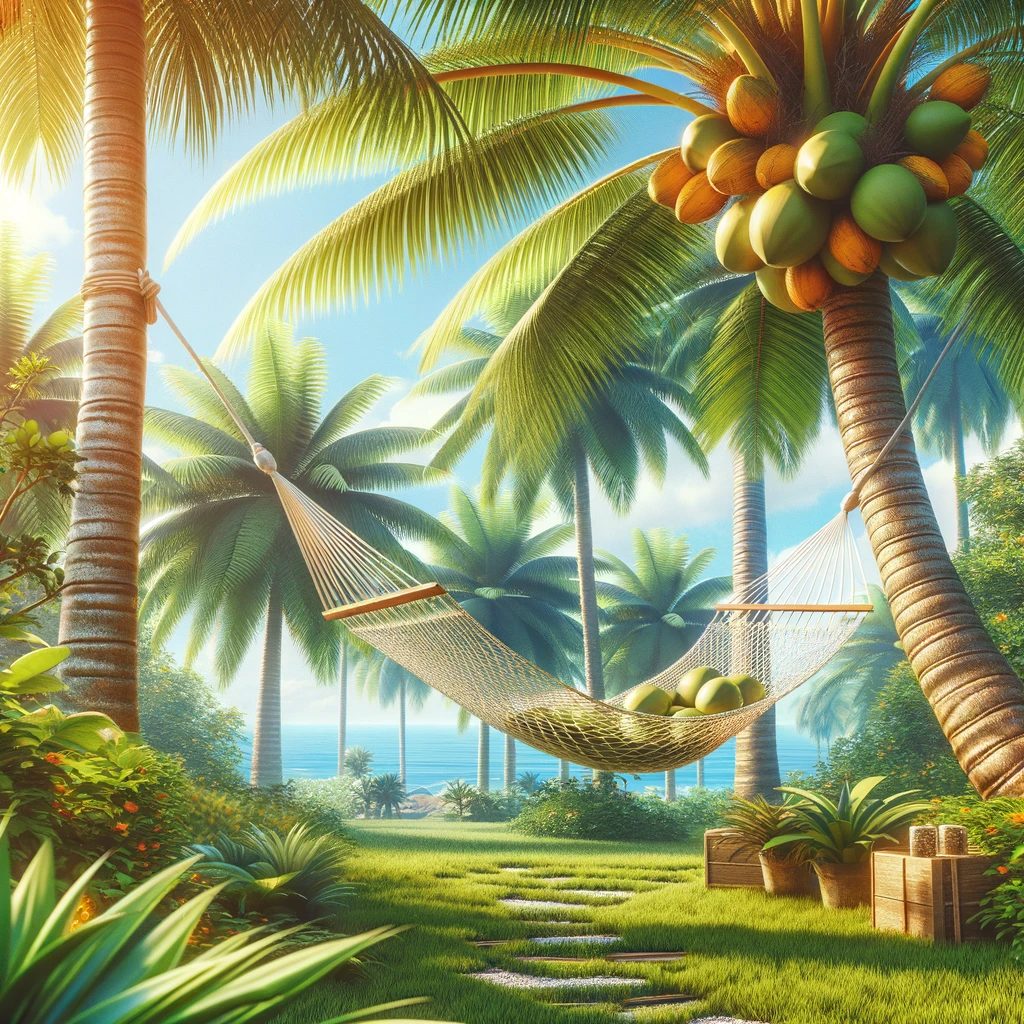
Coconut_Palm_Best_Fruit_Trees_To_Grow_In_Florida
Yellow coconut palm loaded with coconuts growing in Florida.

The coconut palm tree starts producing fruit 6 – 10 years after the seed germinates and reaches its full production at 15- 20 years of age. It usually produces around 50-200 coconut fruit per tree.

The Malayan Dwarf Palm and the hybrid Maypan Palm have been widely grown in Florida because of their reported resistance to LY, a fatal disease of coconut palms in Florida and parts of the Caribbean region.

The coconut palm tree is usually found along tropical, sandy shorelines since it can tolerate salty soils and salt spray. However, salt is not required to grow healthy coconut palms, which can be grown inland.

The coconut palm in Florida gives a tropical feel to the Florida landscape and provides fruit for home use.

If you are looking to grow your own coconut palm in Florida, you can order a coconut palm online here.

Mango Trees In Florida

Mango trees grow very well in Florida. Mangos worldwide are recognized for their sweet-tasting fruit compared to no other. There are endless uses for this delicious fruit.

Mangos are adapted to a tropical, subtropical climate and warmer temperature areas that do not experience freezing.

In South Florida, mangos are grown commercially – and typically, mango trees are a common yard tree in South Florida.

Mangos come in different sizes and shapes, but most have an oval/oblong shape with colors ranging from yellow, green, red, orange, and even purple.

There are over 50 varieties in Florida, and every year, there are efforts to create new hybrids. Zill High-Performance plants have developed many delicious cultivars, such as ‘Orange sherbert,’ one of my all-time favorite mangos. 

If you want to add a mango tree to your garden, you can order one online from here.

Lychee Trees In Florida

Lychee is a subtropical fruit tree that grows excellently in the central and southern parts of Florida.

Lychee trees can grow up to 40 ft in height and are very ornamental in their shape and leaf design. 

The fruit of lychee is jelly-like and transparent, with a leathery red outside shell when fully ripened.

Bees and the wind pollinate lychee flowers. Typically one isolated lychee tree on a property will produce an acceptable amount of fruit alone – but gardeners have been said to experience more fruit when cross-pollinated by having more than one lychee tree in the garden.

Young lychee trees can be damaged by temperatures as low as 28 F to 32 F and even killed by colder temperatures ranging from 24 F to 25 F.

If you want to add an ornamental lychee tree to your garden, you can order one to your doorstep here.

Longan Trees In Florida

Longan is a subtropical tree that grows very well in Florida’s climate.

Longan trees produce fruit that is very similar in characteristics to lychee – being in the same family (Sapindaceae).

Its fruit is a small circular jelly-clear fruit with a leathery light brown coat.

The fruit is very sweet and has a seed in the middle.

The Longan tree in Florida can grow up to 30 ft – 40 ft and is recommended to prune to keep to a manageable height to pick the fruit.

Longan trees are less cold-resistant than lychees. Longans are damaged by cold temperatures in Florida, as low as 29 F to 31 F. Logan trees may face death from temperatures as cold as 26 F to 28 F. Older longan trees will be able to withstand colder temperatures.

Jackfruit Trees In Florida

The jackfruit tree in Florida is a large tree that can grow 30 ft – 40 ft if left unpruned. 

Jackfruit is the world’s largest fruit; once seen, it cannot be mistaken.

In the Florida landscape, jackfruit makes an excellent choice for its vitamin-packed fruit and sweet taste that’s unlike no other fruit.

Jackfruit, when fully ripened, can weigh anywhere from 10 – 60 lbs. That’s a whole lot of fruit!

In Florida, Jackfruit typically sells for 1-3$ a pound depending on the grower, cultivar, size, etc.

The Jackfruit tree has adapted to Florida’s hot tropical climate. For the best chance of growing a productive jackfruit tree, select a sunny area for the jackfruit.

If you want to grow the world’s most enormous fruit that you can grow in Florida, click here.

Conclusion

In Florida, you have many options for which tropical fruits to grow. Each tropical fruit tree is different in taste, size, and color, but each fruit will bring health and joy into your life.

When selecting tropical fruit trees to grow, select the ones you like to eat.

Many nurseries in Florida will allow you to try the fruit of many varieties of fruit trees if the fruit is in season, so it is recommended to try the fruit before you plant the tree.

Should I Bury My Sugar Apple Tree Or Plant it in a Pot?

For all sugar apple lovers, deciding whether to plant your sugar apple in a pot or ground is something we all have to face. Maybe you don’t have the land and have to grow it in a pot, or maybe you want to plant it in the ground but also want it in your favorite pot. This article will help you decide what you should do with your favorite sugar apple tree.

Sugar apple or Annona squamosa is a tropical tree widely grown in Florida. It is loved for its sugary custard taste and sweet aroma.

The grand question is it better to grow sugar apple in a pot or in the ground – here are the factors that matter and the pros and cons of doing so.

https://www.youtube.com/watch?v=rt25t386yr4&feature=youtu.be

About the sugar apple tree

Sugar apple trees can grow 15-20 feet and spread out. Sugar apple roots are shallow – so if you are considering potting it think of a planter consider one that is both wide and deep to accommodate the roots. Sugar apples are not very tolerant of excessively wet or flooded soil conditions, flooding as little as 7 – 10 days may result in root rot and death of the tree.

The leaves of a sugar apple are a green color with a smooth texture and round-shaped appearance.

In Florida, the sugar apple fruit can sell for quite a lot at your local market. Many cultivators of this fruit in Florida do so for the use of commerce making quite the sum. (Check out this article here of the best fruit to grow in Florida to make money.)

Growing Sugar Apple in Pot

Grow your sugar apple in a pot if you

  • Don’t have the yard or space to plant the sugar apple
  • Have no fertile land available
  • Are located in a flood zone that floods often
  • Are located in a colder climate and need to move your sugar apple
  • Want to maintain the size while in a pot
  • Want to move the sugar apple around for decoration

Growing Sugar Apple in the ground

Grow your sugar apple in the ground if you

  • Want to establish a long term fruiting sugar apple tree
  • Want to leave in one spot and manage from where its planted
  • Establish a stronger tree overtime

Which planter should I use to plant my sugar apple?

Sugar apple tree roots are shallow so a pot that can hold at least 5 gallons of dirt is recommended. Here are a few planters that would be great with a sugar apple tree (Annona squamosa).

How to plant sugar apple in a Pot

  1. Pick your planter and add your desired soil mix. Sugar apples like and are well adapted to soils that well-drained – this includes sandy soils and limestone-based soils found all around Florida. You may add fertilizer tom your sugar apple tree. If planting with sandy soil it is recommended a fertilizer formulations such as 2-8-8, 4-8-8, 6-6-6-3, or 8-6-9-5 or similar materials.
  2. Take sugar apple and gently scratch the base of the root system all around to allow the roots to untangle and be able to loosen up to its new planter.
  3. Add a mulching material around the base of your planter. It is recommended to mulch your sugar apples grown in planters due to the plant not being tolerant of colder weather conditions. Mulching also prevents fertilizer from splashing back or out of the planter as well as maintain soil moisture – so it’s recommended to add mulch your sugar apple.

Growing sugar apple in a pot will ensure your maximum mobility with your sugar apple tree. During the colder months in Florida, it is highly recommended to move the tree into a greenhouse or provide a degree of warmth. (Check out this article here on the most affordable greenhouses for your Florida garden.)

Why You Need A Coconut Palm Tree In Florida

Why You Need a Coconut Tree in Your Florida Home Yard

Savor the tropical essence of Florida by adding a coconut tree to your home garden. Not only do they provide refreshing coconut water, but they also enhance your landscape with a touch of paradise.

Key Takeaways

  • Ideal Climate: Florida’s climate is perfect for coconut trees.
  • Health Benefits: Coconuts are rich in nutrients and antioxidants.
  • Economic Value: Grow your own coconuts and save money.
  • Order your Coconut Palm Tree Here

The Fruit: Nature’s Tropical Bounty

The coconut fruit is not just a symbol of tropical bliss but a powerhouse of health. Rich in antioxidants, vitamins, and minerals, it’s a must-have in your Florida garden.

In Florida, the price of coconuts varies between $1 to $3. To get the best deal, check out local flea markets. You might find some of the finest coconuts there at a bargain. Learn more about the benefits of growing your own fruits at Florida’s Fruit Guide.

Why you need a coconut palm tree in Florida

The Plant: Dwarf Coconut Palms

Choosing the Right Variety

In Florida, Dwarf Malayan palms are a popular choice. They start bearing fruit much earlier than their taller counterparts, making them ideal for home gardens.

Caring for Your Palm

These palms require minimal maintenance. They thrive even in drought and high saline conditions, making them a resilient choice for Florida’s climate. Regular salt-spray and watering are key to their health. For more on palm care, visit Palm Tree Care.

The Water: A Heavenly Drink

Coconut water, especially from young green coconuts, is incredibly sweet and refreshing. In Thailand, it’s called ‘Heaven’s Water’, a testament to its delightful taste.

Drinking coconut water in Florida nutrition

The Shell: Eco-Friendly and Versatile

Don’t discard those shells! They make excellent pots for other plants, adding a creative and sustainable touch to your garden.

Order Your Own Coconut Palm Tree

Bring the Tropics to Your Backyard

Were you dreaming of your tropical paradise in your Florida home garden? It’s easier than you might think! You can start by ordering a coconut palm tree, a tropical beauty and relaxation symbol.

Where to Order

For high-quality coconut palm trees, look no further than Fast Growing Trees Nursery. They offer a variety of coconut palms that are perfect for Florida’s climate. Their trees are known for their health, vigor, and fast growth.

Transform your garden into a tropical retreat with your coconut palm tree. Order today and take the first step towards creating your personal Florida paradise!

FAQs

How long until my coconut tree bears fruit?

It takes about 4-6 years for a dwarf coconut tree to start fruiting.

Do I need special soil for my coconut tree?

Coconut trees prefer well-drained, sandy soil. They’re quite adaptable to different soil types found in Florida.

Can I grow a coconut tree anywhere in Florida?

Yes, but they thrive best in coastal, frost-free areas. Typically, coconut palm trees won’t grow north of Tampa, Florida – But there have been reports of coconut palm trees growing as north and central as Orlando, Florida.

What are the benefits of coconut water?

It’s hydrating, rich in electrolytes, and great for heart health.

Conclusion

Growing a coconut tree in Florida is more than just cultivating a plant; it’s about embracing a tropical lifestyle. With minimal maintenance and vast benefits, coconut trees are a splendid addition to any Florida homeyard.

The-most-profitable-fruit-trees-to-grow-in-Florida

Top 5 Best Fruit Trees To Grow In Florida To Make Money

​​The most profitable fruit trees to grow in Florida

Have you ever thought about profiting from your garden or farm? You should try growing some of Florida’s most expensive and delicious tropical fruit in your backyard for extra revenue.

While many tropical fruits can be found locally at your supermarket – many are rare to find.

They can only be obtained by growing your own or visiting your local flea market, where most fruit vendors bring their expensive exotic fruit.

Your probably wondering which fruit trees are the ones that generate the most income in Florida – read below to learn about them all. 

#1 Sugar apple (Annona squamosa)

Growing sugar apple in Florida

How much does sugar apple cost per pound in Florida

Sugar apples in Florida can cost 20-22$ a pound and more for the premium, jumbo sugar apples in pristine condition. (Average price for the 2022 sugar apple season)

Sugar apples that are small to medium in size and weight can range anywhere from 8-15$ a pound. 

How much do sugar apple trees cost?

Sugar apple trees can range from 25-100$ a tree depending on the size and cultivar. You can order sugar apple trees online here.

How To Grow A Sugar Apple Tree In Florida
Sugar apple (Annona squamosa) grown in Florida.

What makes a sugar apple cost expensive?

Sugar apple prices can rise due to the fruit’s size, cultivar, shape, appearance, quality, and stage of ripeness.

For more information on How to grow sugar apple trees, read this article here.

Sugar apple yield per acre

A mature sugar apple tree can produce anywhere from 30-50 fruits per tree in a healthy sugar apple plantation. 

Sugar apples are recommended to be planted out 10 x 15 to produce optimally and have reduced pest control. 

One acre of sugar apples planted at 10 x 15 can grow roughly 300 + sugar apple trees.

Why are sugar apples so expensive?

Sugar apples are expensive due to the fruit’s health benefits, demand, and overall labor that goes into growing the fruit.

To grow a sugar apple from flower to fruit, costs like water, labor, fertilizer, and mulch all add to the price of a sugar apple.

Does sugar apple have a shelf life?

Sugar apple does not have a good shelf life.

Once the sugar apple fruit is harvested, it must be sold or consumed within the first couple of days before it goes too soft, mushy, and inedible. All these factors make sugar apple prices high.

Why did the sugar apple price rise in 2022?

After the pandemic in 2021, the demand for growing organic superfoods like sugar apples became in demand, and the prices in Florida rose from 8-12$ a pound for the biggest and best sugar apples to 20-25$ a pound from many farmers.

Where is the sugar apple from?

The sugar apple is a delicious tropical fruit that originates from the South American tropics.  Where can I buy sugar apples in Florida?

The sugar apple is an tropical fruit that is often only found in local flea markets and fruit stands in Florida. The Pinellas flea market in Clearwater, Florida, sells fresh sugar apples from May through December. 

Because of its difficulty to find in Florida and its delicacy, these fruits often range from 12$ – 20$ the pound making them very profitable to sell. 

When is sugar apple season in Florida?

Sugar apple harvesting season is from May through December. 

#2 Longan (Dimocarpus longan)

Growing longan in Florida

How much does longan cost per pound in Florida?

Longan in Florida costs anywhere from 4-10$ a pound depending on the longan’s variety, size, and freshness.

Jumbo fresh longan of a cultivar like ‘Kohala’ or ‘Biew Kiew’ typically will fetch a higher price, such as 8$ – 10$ per pound. 

Which types of longan can you buy in Florida?

The standard commercial longan cultivars propagated by nurseries that you can purchase in Florida are ‘Kohala’ and ‘Biew Kiew.’ 

What is ‘Kohala’ Longan?

‘Kohala’ Longan is a longan variety adapted to growing and fruiting in more tropical environments. The ‘Kohala’ cultivar originated in Hawaii.

‘Koala’ longan is known for its large-sized fruit with a sweet, floral, and crisp flavor that is said to be superior to ‘Biew kiew’.

What is ‘Biew Kiew’ Longan?

‘Biew Kiew’ Longan is a longan cultivar that originated in Thailand. It is a frequent and high-producing variety of longan adapted to Florida’s soils exceptionally. 

The ‘Biew Kiew’ longan fruit also has a floral and sweet taste that is superior to many longan cultivars.

Which market sells longan in Florida?

The Pinellas Farmers & Flea market will have longan available in the Spring, Fall, and Summer.

Where is longan originally from?

Longan is a soft- chewy, sweet fruit initially from Southern China. This fruit grows in clusters from the longan (Dimocarpus longan) tree. 

This fruit tree can be grown in Florida’s subtropical climates and yield a cash crop. Like the sugar apple, you won’t find this fruit at your local Walmart – instead, we recommend trying your local flea market.  

#3 Lychee (Chinensis litchi)

Growing lychee tree in Florida

How much does Lychee cost in Florida?

Depending on the cultivar and quality, lychee costs anywhere from 8$ – 15$ lb.

When is lychee season in Florida?

Lychee season in Florida only lasts about a total of two months, from June through July.

What is Lychee?

Lychee is sweet, soft, gummy fruit originating from China. Lychee is a fruit also sought after in Florida for its taste and nutrition. 

Although Lychee is a common tree found in Central and South Florida, it is still a costly fruit due to the demand and quantity available per season.

Lychee (Litchi chinensis) fruits harvested in Florida.

Are lychee trees consistent producers?

Some lychee tree cultivars, such as ‘Sweet heart’ and ‘Brewster,’ are known to be more productive than other varieties, such as ‘Emperor,’ which bear fruit more every other year.

Lychee trees, in general, are known to take an off year or two once fruited. 

How much does a lychee tree cost in Florida?

An air-layered lychee tree can cost anywhere from 25.00-100.00$. You can purchase a lychee tree online here.

Where can I find a Lychee tree for sale in Florida?

You can find air-layered lychee trees for sale here. The air-layered lychee trees come from producing lychee trees that are already making litchi fruits.

How are lychee trees propagated in Florida?

Lychees in Florida have propagated mainly air layering for marcotting. What is air layering or marcottings? Air-layering is the act of creating roots around a branch of a tree to separate the branch then and create a clone of the tree within its own root system.

Which varieties of Lychee are available in Florida?

The varieties of Lychee (Litchi chinensis) available in Florida are ‘Brewster,’ ‘Hak-ip,’ ‘Emperor,’ and ‘Sweetheart.’

How do I make my lychee tree produce fruits every year?

Enable to make your lychee tree produce every year, an organic micro-mineral supplement called ‘Azomite’ is recommended to add every year to your lychee trees.

Azomite is an organic trace mineral blend that provides lychee trees with the supplements to produce fruits year after year.

Every time a lychee tree ( or any tropical fruit tree ) produces fruits, its nutrients are taken from the soil and go into the fruit. 

If you want your litchi tree to produce fruits consistently, it is vital to provide a good source of micronutrients such as Azomite.

#4 Dragon Fruit Pitaya (Selenecerius udatus) 

Growing dragon fruit in Florida

Where does dragon fruit originate from?

Dragon Fruit or Pitaya originates from Southern Mexico and Central America. This tropical cactus crop grows excellently in Florida and can also bear many tasty expensive fruits. 

How much does dragon fruit sell for in Florida?

Typically dragon fruit will cost anywhere from 5$ – 6$ per lb. 

How much fruit does dragon fruit produce per year?

Dragon Fruit will produce fruit every 12-18 months, providing 20-60 Pounds of fruit per plant.

Dragon Fruit Season in Florida

Dragon fruit season in Florida is primarily in the summer, from the months of June through December. 

 Which dragon fruit varieties can I grow in Florida?

You can grow three types of dragon fruits in Florida

  • Pink Dragon Fruit with a White Inside (Selenecerius undatus)
  • Red Dragon Fruit with a Red Inside (Selenecerius costaricensis)
  • Yellow Dragon Fruit with a White Inside (Selenecerius megalanthus)

Why is dragon fruit so expensive?

Dragon fruit is expensive due to the time and supplementation it takes to grow it. The cost of dragon fruit is influenced by the amount of fertilizer, water, and overall care the farmers have to input.

Where can I order dragon fruit tree online in Florida?

If you want to grow your own tropical cactus that provides delicious tropical fruits, you can order your own dragonfruit plant here.

#5 Jack Fruit (Artocarpus heterophyllus)

Growing Jackfruit in Florida

How much does Jackfruit cost in Florida?

Jackfruit (Artocarpus heterophyllous) in Florida costs about 1-3$ the pound depending on the cultivar and grower. 

One Jackfruit grown in Florida can easily weigh 20 pounds and could cost anywhere from 20-60$ per fruit.

How long does Jackfruit take to grow fruit?

Jackfruit trees from seed can start producing flowers and fruits as early as three years from seed.

Jackfruit takes roughly 6-8 months from flower to fruit harvest. The speed at which Jackfruit ripens can be influenced by the age, health, and nutrients that a tree has.

Which Jackfruit variety is the best?

In my opinion, the ‘Cempejack’ or ‘Cheena’ is the best variety of Jackfruit. This variety ‘Cheena’ is a hybrid of two Artocarpus genus, the common Jackfruit (A. heterophyllous) crossed with Cempedak (Artocarpus integer)

Jackfruit_Profitable_Fruit_Tree_To_Grow_in_Florida
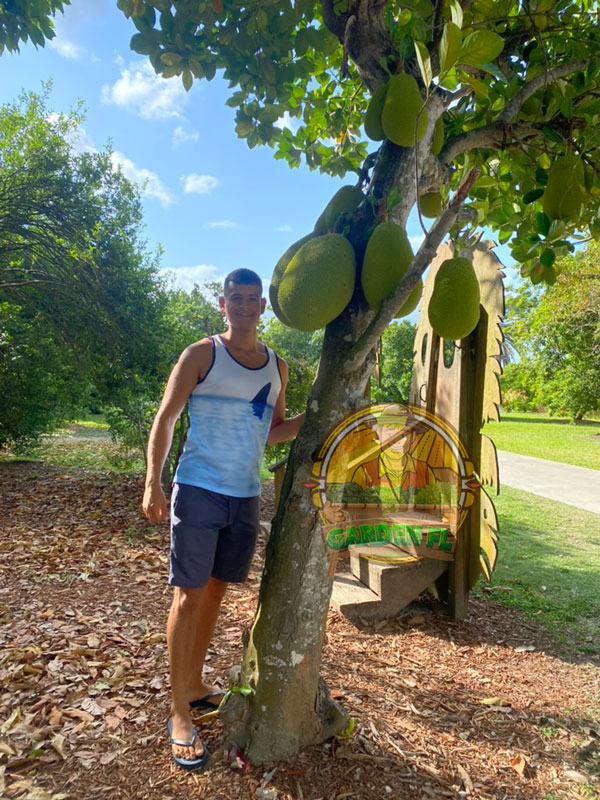
Jackfruit tree growing in Homestead, Florida at the Fruit n Spice Park.

When is jackfruit season in Florida?

Jackfruit season in Florida is from June through November.

Which jackfruit varieties can I grow in Florida?

The jackfruit cultivars that can be grown in Florida are ‘Black Gold,’ ‘Cheena,’ ‘Orange crush,’ ‘Conchin’, and more.

Where can I find a jackfruit tree for sale in Florida?

You can find a grafted jackfruit tree for sale at this nursery here. 

How long before the jackfruit tree produces fruit?

It may take up to 3 – 4 years for a jackfruit tree from the seed to start producing fruit, and it can keep growing and producing for up to 100 years – providing you with a cash crop all your life. 

#6 Atemoya (Annona atemoya)

Growing Atemoya in Florida

How much does atemoya cost in Florida?

Atemoya in Florida can cost anywhere from 10-15$ depending on the specific cultivar, size, shape, and ripeness of the atemoya fruit.

Which variety of atemoya costs the most?

In Florida, some of the higher-priced atemoya varieties are ‘Phet Pak Chong,’ ‘Lisa,’ ‘Geffner,’ ‘Dream,’ and ‘Priestly.’

  • Phet Pak Chong – 10 – 15$ the pound
  • Lisa – 12 – 15$ the pound
  • Geffner – 10 – 15$ the pound
  • Dream – 12 – 15$ the pound
  • Priestly – 10 – 15$ the pound
Atemoya_Most_Profitable_Fruits_To_Grow_In_Florida
Phet Pak Chong Atemoya fruits grown in Florida

Are atemoyas hard to grow in Florida?

Atemoyas (Annona atemoya) have adapted to Floridan soils and can grow very well in our climate. 

The atemoya tree thrives in sandy to loamy soils and is easy to beginner cash crop in Florida.

How much do atemoya trees cost in Florida?

Atemoya trees can cost anywhere from 35-100$ + a tree depending on the size, health, cultivar, rootstock, etc.

Conclusion

Wether your thinking about growing fruit trees to grow in Florida for yourself or to make some money you have come to the right place. 

By planting sugar apple, longan, Lychee, dragonfruit, Jackfruit, and atemoya trees, you are growing the most profitable fruit trees in Florida.

Whether you’re a beginner or an expert fruit gardener, these fruits are some of the easiest and most profitable to grow in Florida.

What are you waiting for? Get out there and make a profit from your Florida garden!