Jackfruit How to Grow and Harvest This Giant Tropical Fruit in Florida

Jackfruit: How to Grow and Harvest This Giant Tropical Fruit in Florida

Jackfruit (Artocarpus heterophyllus) is a large, tropical fruit native to South Asia, known for its unique flavor and versatility in both sweet and savory dishes. 

Florida’s climate provides the perfect environment for growing jackfruit, and this guide will help you learn about the different varieties, how to care for the trees, and how to harvest and use the fruit.

Good Products For Growing Jackfruit

Jackfruit sold in Florida at the Pinellas Flea market Clearwater
Jack fruit for sale in Florida at the Farmers Market in Clearwater, Florida.

Jackfruit Quick Care Guide

Common Name(s) Jackfruit, Yaca
Scientific Name Artocarpus heterophyllus
Days to Harvest 4-7 years + fruit from seed.
Light Full sun for best fruit production
Water Water regularly, ensuring consistently moist but not waterlogged soil
Soil Jackfruit grows in various types of soil as long as it is well-draining.
Fertilizer Slow-release fertilizer specifically formulated for tropical fruit trees such as Osmocote or Florikan
Pests Scale insects, Mealybugs, Fruit flies
Diseases Stem dieback, Root rot, Fruit rot

A Short History of Jackfruit

Jackfruit is believed to have originated in the rainforests of India, and it has been cultivated for thousands of years in South and Southeast Asia. 

The fruit made its way to the Americas during the 16th century when Portuguese explorers introduced it to Brazil.

Today, jackfruit trees thrive in tropical and subtropical climates around the world, including Florida.

Garden Florida with jackfruit Fruit Florida Garden
Garden Florida with jackfruit trees loaded with jackfruits.

Varieties of Jackfruit

There are two main types of jackfruit based on the texture of the fruit’s flesh: the soft variety and the crunchy variety. 

Soft jackfruit has a juicy, tender texture, while crunchy jackfruit is firmer and less juicy. Both types come in a range of flavors, from sweet to subtly savory.

In Florida, some popular varieties of jackfruit that can be ordered online are

  • Cheena – jackfruit x Chempedak cross
  • Tommy Morrison Red – orange variety jackfruit
  • Banana Crunch – crunchy variety
  • Black Gold
  • Borneo Red
  • Cochin (Dwarf)
  • Golden Nugget
  • Honey Gold (Dwarf Tree)
  • J-31
  • Lemon Gold
  • Mai 1
  • Mai 2
Cempedak Fruit Artocaprus integer
Garden Florida holding a cempedak fruit Artocarpus integer
Garden Florida is holding a chempedak (Artocarpus integer) fruit.

Caring for Jackfruit Trees in Florida

Growing jackfruit in Florida requires proper care and attention to ensure a healthy tree and bountiful harvests. Some key aspects of jackfruit tree care include:

  1. Mulching: Applying a layer of mulch around the base of the tree helps retain moisture, suppress weeds, and regulate soil temperature. Use organic materials like wood chips, leaves, or grass clippings for the best results.
  2. Fertilizing: Use a slow-release fertilizer specifically formulated for tropical fruit trees to provide essential nutrients for growth and fruit production.
  3. Watering: Jackfruit trees require constant watering, especially during the establishment phase. Ensure the soil remains consistently moist but not waterlogged.
  4. Foliar Sprays: Applying foliar sprays can help prevent and manage diseases like stem dieback, a common problem for jackfruit trees in Florida.

Harvesting and Using Jackfruit

When the jackfruit is ripe, its color changes from green to yellowish-brown, and it emits a strong, sweet aroma. Use a sharp knife or pruning shears to cut the fruit from the tree, being careful not to damage the stem.

To cut the jackfruit, follow these steps:

  1. Place the fruit on a clean surface and cut it in half lengthwise.
  2. Cut each half into smaller sections, following the lines of the fruit’s segments.
  3. Use a knife or your fingers to separate the flesh from the seeds and the fibrous core.
Jack Fruit Cut Open
Garden Florida is holding a chempedak (Artocarpus integer) fruit.

Jackfruit can be used in a variety of dishes, both sweet and savory. The ripe fruit can be eaten fresh, added to fruit salads, or used in desserts. Unripe jackfruit can be cooked as a vegetable, often as a meat substitute in curries or stews.

My favorite way to eat jackfruit as a dessert is loading them with sweet sticky rice with coconut milk drizzled on top, as I did here.

Jackfruit with sticky rice and coconut milk
Jackfruit with sticky rice and coconut milk.

Growing Jackfruit in Containers

For gardeners with limited space or who wish to move their trees indoors during colder months, container gardening is a viable option for growing jackfruit.

Choose a large container with drainage holes and fill it with a high-quality potting mix. Ensure the tree receives adequate sunlight and proper care, as mentioned in the earlier section on caring for jackfruit trees.

Tools for Fruit Tree Gardening in Florida

To successfully grow and maintain jackfruit and other fruit trees in Florida, it’s essential to have the right tools. Some must-have tools for fruit tree gardening include:

  1. Pruning shears or loppers for trimming branches
  2. A sturdy ladder for reaching taller trees
  3. A sharp knife for harvesting fruit
  4. A watering can or hose with an adjustable nozzle for controlled watering
  5. Protective gloves for handling fruit and branches

Other Tropical Fruit Trees to Grow in Florida

Jackfruit is just one of the many tropical fruit trees that thrive in Florida’s climate. If you’re interested in expanding your fruit tree collection, consider growing some of these other tropical fruits:

For more information on growing a variety of tropical fruit trees in Florida, check out this beginner’s guide to tropical fruit gardening and this guide on growing rare and unusual tropical fruits.

Conclusion

Growing jackfruit in Florida can be rewarding, providing you with an abundant harvest of this unique and versatile fruit.

By following the tips and recommendations in this guide, you can ensure the success of your jackfruit tree and enjoy the fruits of your labor for years to come.

Don’t forget to explore other tropical fruit trees that thrive in Florida, and consider adding a few more to your garden to create a diverse and delicious fruit tree paradise.

Disease Prevention and Management for Custard Apple

Disease Prevention and Management for Custard Apple

Custard apples are a delicious and nutritious tropical fruit but can be susceptible to various pests and diseases.

In this article, we’ll explore common pests that attack custard apples and discuss organic pest control methods to help you protect your precious fruit trees.

Potato leaf hoppers on the backside of custard apple leaves
Potato leaf hoppers on the backside of custard apple leaf.

Common Pests That Attack Custard Apple Trees

Several pests can infest custard apple trees, including:

  1. Whiteflies
  2. Scale insects
  3. Mealybugs
  4. Potato leaf hoppers
  5. Annona seed borers
  6. Aphids

Whiteflies

Whiteflies are tiny, white-winged insects that can cause damage to custard apple trees by sucking the sap from the leaves.

This sap-sucking weakens the plant and can lead to yellowing leaves, stunted growth, and reduced fruit yield.

Additionally, whiteflies excrete a sticky substance called honeydew, which can promote the growth of sooty mold on the tree.

Custard apple help by Garden Florida Annonaceae fruits
Garden Florida is holding a ‘San pablo’ custard apple (Annona reticulata) fruit.

Scale insects

Scale insects: Scale insects are small, sap-sucking pests that attach themselves to the stems, leaves, and fruit of custard apple trees.

They can cause leaf yellowing, leaf drop, and reduced plant vigor. Heavy infestations can lead to decreased fruit production and even tree death.

Mealybugs

Mealybugs: Mealybugs are small, soft-bodied insects that feed on the sap of custard apple trees, causing leaf distortion, yellowing, and premature leaf drop.

They excrete honeydew, which can lead to sooty mold growth and attract ants, further complicating the infestation.

Potato leaf hoppers

Potato leaf hoppers: Potato leaf hoppers are small, greenish-yellow insects that feed on the sap of custard apple tree leaves.

Potato-Leaf-Hoppers-Annonaceae-Annona-Custard-Apple-Sugar-Apple
As in this photo, leaves attacked by potato leaf hoppers will appear curled in yellow and distorted.

Their feeding can cause leaf curling, yellowing, and necrosis, ultimately reducing the tree’s overall health and fruit production.

Annona seed borers:

Annona seed borers: Annona seed borers are larvae of certain moths that tunnel into the seeds of custard apple fruits.

This infestation can lead to fruit drop and damage to the seeds, making the fruits unappealing and reducing their market value.

Aphids

Aphids: Aphids are small, soft-bodied insects that feed on the sap of custard apple trees.

They can cause leaf curling, yellowing, distortion, and a reduction in tree vigor and fruit production.

Aphids on custard apple tree with ants
Aphids feeding on soursop leaves with ants.

Like whiteflies and mealybugs, aphids also excrete honeydew, leading to sooty mold growth and attracting ants.

These pests can cause significant damage to your custard apple trees and reduce your fruit yield. Luckily, there are organic pest control methods to help you manage these pesky invaders.

Organic Pest Control Methods

Pyganic

Pyganic is an organic pesticide derived from chrysanthemum flowers. It is effective against various pests, including whiteflies, aphids, and potato leaf hoppers.

Pyganic works by targeting the nervous systems of pests, causing paralysis and death.

No products found.

It is essential to use Pyganic responsibly, as it can harm beneficial insects, such as butterflies and bees. To protect these helpful creatures, spray Pyganic early in the morning before they start flying around.

Remember to follow the label instructions for the proper application rate and safety precautions.

Mixing and Applying Pyganic with a Backpack Sprayer

Using a backpack sprayer to apply organic insecticides like Pyganic is an effective way to treat pests on your custard apple trees.

Follow these steps to mix and apply Pyganic using a backpack sprayer:

Read the label: Before you begin, thoroughly read the Pyganic label to understand the recommended application rate and safety precautions. The label will provide information on how much Pyganic concentrate to mix with water to achieve the desired concentration.

Prepare the backpack sprayer: Make sure your backpack sprayer is clean and free of any residue from previous applications. If necessary, rinse the sprayer with water to ensure it’s clean.

Measure the Pyganic concentrate: Based on the label instructions, measure the required amount of Pyganic concentrate for your specific pest problem and tree size. Use a measuring cup or graduated cylinder for accuracy.

Fill the backpack sprayer: Fill the backpack sprayer halfway with water. Then, slowly pour the measured Pyganic concentrate into the sprayer. This will help to ensure that the concentrate mixes thoroughly with the water.

Mix the solution: After adding the Pyganic concentrate, fill the backpack sprayer with the remaining water. Close the sprayer and gently shake or agitate it to mix the solution evenly.

Put on safety gear: Before applying Pyganic, wear appropriate safety gear, including gloves, goggles, and long sleeves. This will protect you from potential skin irritation or eye contact with the insecticide.

Apply Pyganic: With the backpack sprayer on your back, pump the handle to create pressure in the sprayer. Then, using the spray wand, apply the Pyganic solution evenly to the custard apple tree, focusing on the leaves, branches, and trunk. Be sure to cover both the top and bottom of the leaves, as pests often hide on the underside.

Clean the backpack sprayer: After applying the Pyganic solution, thoroughly rinse the backpack sprayer with water to remove any remaining insecticide. This will prevent cross-contamination and ensure the sprayer is ready for future use.

Remember to apply Pyganic early in the morning before butterflies and bees start flying around, as it can be harmful to beneficial insects.

Additionally, be prepared for consistent applications of Pyganic to effectively control pests, as it is an organic solution.

Neem Oil

Neem oil is another organic option for controlling pests like scale insects, whiteflies, aphids, and mealybugs.

Extracted from the neem tree, this oil works by disrupting the insects’ feeding and reproductive systems, eventually killing them.

No products found.

Keep in mind that neem oil requires consistent and weekly applications to effectively control pests, as it is an organic solution.

Regular applications ensure that you can manage pest populations and protect your custard apple trees.

Essential Tools for Pest Control

To apply organic pest control methods, you will need the right tools, such as a backpack sprayer or a handheld sprayer.

These tools help you evenly distribute the pesticide on your custard apple trees, ensuring that you cover all the affected areas.

No products found.

No products found.

Custard apple (Annona reticulata)

Throughout your custard apple tree’s life, you may encounter various challenges and questions. Here are some helpful articles to guide you along the way:

By understanding the pests that can attack your custard apple trees and implementing organic pest control methods, you can help ensure a healthy and bountiful harvest.

Remember to use the right tools and techniques to effectively protect your fruit trees from damage.

Container-Gardening-for-Tropical-FruitsHow-to-Grow-Your-Favorite-Florida-Fruits-in-Pots

Container Gardening for Tropical Fruits: How to Grow Your Favorite Florida Fruits in Pots

Florida is a paradise for growing a wide range of tropical fruits, with many people choosing to grow their favorites in pots or containers for ease of maintenance and mobility. 

This article will guide you on how to grow and care for Sugar apple, Atemoya, Jaboticaba, Carambola, and Soursop in containers. 

We will also provide tips on choosing the best containers, fertilizers, water, and foliar spray care guides.

Sugar Apple

Sugar Apple (Annona squamosa) is a popular tropical fruit native to the Americas, known for its sweet and custard-like flesh. Discover the different varieties of Sugar Apples and learn how to grow a Sugar Apple tree in Florida. If you’re wondering whether to plant your Sugar Apple in the ground or a pot, read this article for guidance.

Lessard Thai and Na Dai sugar apple
Lessard Thai and Na Dai Vietnamese sugar apple.

Sugar Apple Care

Atemoya

Atemoya is a hybrid of Sugar Apple and Cherimoya, offering a blend of flavors and an improved growing experience. Learn how to grow an Atemoya tree in Florida and explore the differences between Atemoya and Sugar Apple.

Atemoya fruit African Pride
African pride (AP) atemoya.

Atemoya Care

  • Container: Select a container at least 10-25 gallons in size with drainage holes.
  • Soil: Use a well-draining and fertile soil mix.
  • Fertilizer: Apply a balanced slow-release fertilizer every few months.
  • Water: Water regularly, keeping the soil consistently moist.
  • Pruning: Follow the same pruning guidelines as for Sugar Apples.
  • Hand Pollination: Hand pollination is also recommended for Atemoya trees.

Jaboticaba

Jaboticaba is a Brazilian fruit with a unique grape-like appearance and taste. Learn more about planting Jaboticaba and how to choose the best Jaboticaba fertilizer for maximum fruit yield.

Jaboticaba fruit tree
‘Sabara’ Jaboticaba fruit tree fruiting

Jaboticaba Care

  • Container: Opt for a container of at least 25-30 gallons with good drainage.
  • Soil: Use a well-draining soil mix with a slightly acidic pH such as Promix HP.
  • Fertilizer: Apply a balanced slow-release fertilizer or specific Jaboticaba fertilizer every few months.
  • Water: Water regularly, maintaining consistent soil moisture without over-watering.
  • Pruning: Prune lightly to maintain the desired shape and size, but avoid excessive pruning, as Jaboticaba trees fruit on old wood.

Carambola

Carambola, also known as Star Fruit, is a tropical fruit tree native to Southeast Asia. Its fruit is known for its unique star shape when sliced and its refreshing, slightly tart flavor.

Carambola Care

  • Container: Choose a large container of at least 10-25 gallons with drainage holes.
  • Soil: Opt for a well-draining, fertile soil mix.
  • Fertilizer: Apply a balanced slow-release fertilizer every few months.
  • Water: Maintain consistent soil moisture without over-watering.
  • Pruning: Regularly prune to maintain the desired size and shape and to encourage fruit production.

Soursop

Soursop (Annona muricata) is a tropical fruit known for its distinctive flavor, combining sweet and sour elements. Discover more about Soursop and the Golden Yellow Soursop variety.

Garden Florida with Soursop Guanabana Fruit Annona Muricata
Garden Florida holding two soursop fruits.

Soursop Care

  • Container: Select a large container of at least 20-25 gallons with good drainage.
  • Soil: Use a well-draining, fertile soil mix.
  • Fertilizer: Apply a balanced slow-release fertilizer every few months.
  • Water: Keep the soil consistently moist but not soggy.
  • Pruning: Prune regularly to maintain the desired shape and size and to encourage fruit production.

Special Care for Tropical Fruit Trees in Pots

When growing tropical fruit trees in pots, extra care is needed to ensure they receive the right nutrients, water, and protection. Use the following guides to help you:

Following these tips and guides, you can enjoy growing your favorite tropical fruits in containers, reaping the rewards of their delicious flavors and unique appearance.

A Guide to Growing Rare and Unusual Tropical Fruits in Florida

A Guide to Growing Rare and Unusual Tropical Fruits in Florida

A Guide to Growing Rare and Unusual Tropical Fruits in Florida

Florida’s warm climate and diverse ecosystem make it the perfect place to grow a wide range of rare and unusual tropical fruits.

In this guide, we’ll explore some of these fascinating fruits, including sugar apple, cherilata, soursop, and more, and provide tips on how to grow them successfully in your garden.

Sugar Apple (Annona squamosa)

Sugar apple is a sweet, custard-like fruit native to the tropical Americas. It’s part of the Annonaceae family, which also includes custard apple and cherimoya.

Sugar apples are easy to grow and can thrive in Florida’s climate. To get started, check out our guide on how to grow a sugar apple tree in Florida.

For more information about sugar apple varieties, visit our post on exploring the different varieties of Annona squamosa.

Sugar apple Annona squamosa Garden Florida
Sugar apple (Annona squamosa)
Garden Florida Holding Sugar apple fruit
Garden Florida holding a sugar apple (Annona squamosa)

Atemoya (Annona × atemoya)

Atemoya is a hybrid of sugar apple and cherimoya, and it has a delicious, creamy texture.

It’s well-suited for Florida’s climate, and you can learn more about the differences between atemoya and sugar apple in our post on atemoya vs. sugar apple.

For tips on growing an atemoya tree in Florida, check out our guide on how to grow an atemoya tree.

Garden Florida with Atemoya Annona fruits
Garden Florida with atemoya fruits.

Soursop (Annona muricata)

Soursop is another Annonaceae family member known for its tangy flavor and potential health benefits.

To learn more about soursop and how it compares to custard apple, read our article on soursop vs. custard apple.

For more information on the golden yellow soursop variety, visit our post on all about the golden yellow soursop.

Spiky guanabana soursop fruit from Colombia
Soursop fruit (Annona muricata)

Cherilata Fruit

Cherilata fruit is a lesser-known tropical fruit that’s worth exploring. To learn more about this exotic fruit, read our post on what is a Cherilata fruit.

Cherilata fruit
Cherilata fruit on the inside grown by Garden Florida

Tips for Growing Rare and Unusual Tropical Fruits in Florida

  1. Choose the right time to plant: Learn about the best time to plant fruit trees in Florida to ensure a successful harvest.
  2. Select the right soil: Understand the best types of soils to plant with to provide your fruit trees with the nutrients they need.
  3. Fertilize appropriately: Use the best tropical fruit tree fertilizers to encourage healthy growth and fruit production.
  4. Protect from cold temperatures: Some tropical fruits are sensitive to cold weather. Learn how to protect your seedlings from the cold to survive during cooler months.
  5. Manage pests and diseases: Keep an eye on your fruit trees and address any issues early on. For example, if you notice your sugar apples turning black, read our post on why sugar apples turn black and how to address this problem.
  6. Prune correctly: Regular pruning is essential for maintaining the health and productivity of your fruit trees. Learn when and how to prune sugar apple and atemoya trees to promote optimal growth.
  7. Hand-pollinate when necessary: Some tropical fruit trees may require hand-pollination to ensure fruit production. For instance, read our guide on how to hand-pollinate sugar apple or atemoya flowers in Florida to improve your harvest.
  8. Choose the right planting method: Depending on your fruit tree and garden space, you may need to decide whether to plant in the ground or in a container. For example, consider whether you should plant a sugar apple in the ground or in a pot.
  9. Source your trees from reputable nurseries: To ensure you’re getting high-quality fruit trees, choose from our list of the top 10 online fruit tree nurseries in Florida.
  10. Expand your fruit tree knowledge: Learn more about the variety of fruits that grow in Florida by reading our guide on what fruits grow in Florida, and discover what fruit trees grow the best in Florida.

By following these tips and exploring the wealth of information available on our website, you’ll be well on your way to growing a diverse and thriving tropical fruit garden in Florida. Happy tropical fruit gardening!

Growing-Soursop-Annona-muricata-Annonaceae.

Growing Guanabana: A Step-by-Step Guide to Growing Your Own Soursop Tree

Growing Guanabana: A Step-by-Step Guide to Growing Your Own Soursop Tree

Guanabana, also known as soursop, is a tropical fruit with a unique flavor that is highly sought after for its health benefits. 

Growing your own soursop tree can be a rewarding experience, but it requires some effort and knowledge about growing Annonaceae fruit trees.

Soursop is in the same family as popular Annona fruits sugar apple, cherimoya, custard apple, and atemoya, but it’s an entirely different and much larger fruit.

In this article, we will provide a step-by-step guide to growing your own soursop tree, from selecting the right location to harvesting your fruit.


Good products at Amazon for growing Soursop

Garden Florida with Soursop Guanabana Fruit Annona Muricata
Garden Florida holds two soursop (Annona muricata) fruits with a sugar apple (Annona squamosa) in the mouth.


Soursop Quick Care Guide

Common namesSoursop, Guanabana, Mang Cau Xiem, Graviola
Scientific nameAnnona muricata
Months of harvestJuly through December
Sun requirementsFull sun for best fruiting
Water requirementsTwo to three times per week, depending on the weather
Soil requirementsTolerates many soils as long as well draining
Fertilizer requirementsTwo to three times per year with Osmocote or Florikan
PestsPotato leaf hopper, Annona seed borer, Scale, Whiteflies
DiseasesRoot rot, Branch dieback
Soursop (Annona muricata) care guide. Last updated March 10th, 2023.

Soursop Varieties

Soursops come in many varieties, colors, shapes, and sizes. Some soursops have a golden color, known as the golden soursop, and others are known for having no fiber.

Soursop varieties and cultivars Annona muricata
Garden Florida is holding a cherimoya fruit (Annona cherimola) with soursop fruit in the background (Annona muricata).

Some popular soursop varieties that can be found in the nursery trade are

  • Miami (Self-pollinating) 
  • Cuban fiberless
  • Whiteman fiberless
  • Giant Proflific
  • Beverly fiberless
  • Golden Soursop (Yellow Soursop)

If you want to grow your own soursop tree, you can order one straight to your doorstep.

Choosing the Right Location

The first step to growing a healthy soursop tree is selecting the right location. Guanabana trees require full sunlight to part shade to thrive, so choosing a spot with at least six hours of direct sunlight daily is essential. 

Spiky guanabana soursop fruit from Colombia
Soursop (Annona muricata) fruit from Colombia. This soursop was very spikey.

Additionally, soursop trees prefer a warm and humid climate, so they should be planted in a location with a consistent temperature of 70-80°F.

Soursop is known to be more of an extreme tropical fruit tree, meaning they are sensitive to cold weather. A microclimate is ideal for soursop, protecting them from more freezing temperatures in winter.

Selecting the Right Soil

Soursop trees require well-draining soil with a pH between 5.5-6.5. The soil should be rich in organic matter, such as compost or manure, and free from rocks and debris. 

Planting Soursop (Annona muricata)

Soursop trees can be grown from seed but are often grafted onto a rootstock for improved disease resistance and fruit quality.  Typically soursop is grafted onto soursop (Annona muricata) seedling.

Dig a hole twice as wide and deep as the root ball when planting your seedling. 

Gently remove the seedling from its container and place it in the hole, ensuring the top of the root ball is level with the soil surface. Backfill the hole with soil and water thoroughly.

Inside a soursop fruit. Soursop fruit cut in half. Annona muricata
Soursop (Annona muricata) fruit cut in half.

Watering and Fertilizing the Soursop Tree

Soursop trees require regular watering, especially during dry periods. Water deeply once or twice a week, ensuring the soil is moist but not waterlogged. 

It is important not to overwater your soursop tree, which can lead to root rot. Additionally, soursop trees require regular fertilization to ensure healthy growth and fruit production. 

Use a balanced slow-release fertilizer, such as Osmocote plus 15-9-12, and apply it every two to three months during the growing season.

Soursop trees also benefit significantly from monthly foliar sprays, which help them absorb essential nutrients through their leaves.

If your soursop tree is yellow, spraying chelated iron will make it a healthy dark green color again.

Soursop Flowers

Soursop flowers are more round and globe-shaped than sugar apple, atemoya, and cherimoya flowers.

On the other hand, Atemoya, cherimoya, and sugar apple flowers are typically more elongated and triangular in shape.

Soursop flower that is in bloom in the female stage. Annona muricata flowering.
Soursop (Annona muricata) flower in bloom.
Soursop (Annona muricata) with other tropical fruit.

Soursop flowers also tend to have a more pronounced fragrance than the other three types of flowers, with a strong, sweet scent that is hard to miss.

Soursop flowers are generally about 2 inches long and 1-2 inches wide. They have a distinctive heart-shaped or oblong shape with petals that are typically yellow-green. 

The petals are pointed and curve back towards the stem, giving the flower a slightly triangular appearance.

In terms of texture, soursop flowers are delicate and smooth to the touch. They have a slightly waxy surface on the outside and are soft and tender on the inside. The flower can grow from branches or even the trunk of the soursop.


The soursop flower can also be hand pollinated to guarantee fruit set on the soursop tree.

Pruning Soursop Tree

Pruning and training your soursop tree can help to promote healthy growth and fruit production. 

Begin by removing any dead or damaged branches, as well as any branches that are crossing or rubbing against each other. 

Next, train the remaining branches to grow outward and upward, using stakes or trellises to support them if necessary. 

It is essential to prune your soursop tree regularly to ensure it maintains its shape and does not become too large or unwieldy.

Soursop Flower Annona muricata Guanabana Flowers
Soursop (Annona muricata) flowers with a small soursop fruit growing.

Managing Pests and Diseases

Soursop trees are susceptible to various pests and diseases, including potato leaf hoppers, Annona seed borers, mealybugs, scale insects, and fruit rot. 

To prevent these problems, inspect your tree regularly for signs of infestation or disease. Use insecticidal organic sprays such as Pyganic – my favorite go-to Annonaceae fruit tree pest spray or horticultural oil to control pests. 

Remove any infected or diseased branches or fruit to prevent the spread of disease. 

Additionally, practicing good sanitation, such as removing infected leaves and fruit, can help to reduce the risk of pests and diseases.

Harvesting Your Fruit

Soursop fruit typically ripens six to eight months after flowering. The fruit should be harvested when it is mature but firm, as it will continue to ripen off the tree. 

You can tell when the soursop is ready to harvest because it will start changing its color from dark green to a light green/yellow color. The fruit may begin to get soft in certain parts, and a sweet and sour aroma may arise.

Soursop Smoothie with fresh guanabana pulp Annona muricata.
Soursop smoothie in Colombia at a shop that only sells soursop (Annona muricata) and cherimoya (Annona cherimola).

To harvest your fruit, gently twist it off the tree, careful not to damage the stem or fruit. Soursop fruit can be eaten fresh or used to make juice, smoothies, and other recipes.

Frequently Asked Questions About Soursop

Q: How long does it take for a soursop tree to bear fruit?

A: A soursop tree typically takes 3-4 years to bear fruit from seed.

Q: How often should I water my soursop tree?

A: Depending on weather conditions, soursop trees should be watered twice a week or more deeply.

Q: Can soursop trees be grown in containers?

A: Yes, soursop trees can be grown in containers, but they may not grow as large or produce as much fruit as trees planted in the ground.

Q: How do I know when my soursop fruit is ripe?

Soursop fruit will be ripe when soft to the touch and has a sweet and sour aroma. It should be harvested when it is mature but still firm. The soursop will continue to ripen off the tree.

Q: How do I prevent pests and diseases on my soursop tree?

Inspect your tree regularly for signs of infestation or disease, and remove any infected or diseased branches or fruit. Practice good sanitation by removing fallen leaves and fruit. Use insecticidal soap or horticultural oil to control pests if necessary.

Q: Are soursops poisonous?

A: Eating soursop fruit pulp is not poisonous. The seeds and the skin of the soursop fruit contain small amounts of Annonacin, which can be toxic to humans if consumed in large quantities – so it’s advised never to consume the skin or the seeds of the soursop fruit. 

Q: What’s the best fertilizer for soursop?

A: The best fertilizer to grow soursop is Osmocote plus or Florikan. These slow-release fertilizers are preferred over instant-release fertilizers due to slow-release fertilizers containing micronutrients that don’t burn the soursop’s root system and give continuous feed over a few months, which the soursop prefers rather than all at once.

Conclusion

Growing your own soursop tree can be a fun and rewarding experience, but it requires some effort and knowledge. By selecting the right location and soil, planting the seedling properly, and caring for your tree through watering, fertilizing, pruning, and pest management, you can enjoy a healthy and fruitful soursop tree in your backyard.

Recent Articles

Custard apple fruit Annona reticulata Garden Florida

Custard Apple (Annona Reticulata) Tree Care: A Guide for Growing Delicious Fruits

The custard apple, botanically known as Annona reticulata, is a tropical fruit known for its custard texture and sweet taste. 

This fruit is commonly grown in Central and South America and has recently gained popularity in other parts of the world.

If you want to grow custard apple trees, this guide will provide all the information you need to ensure a bountiful harvest.

Good products at Amazon for growing Custard Apple

Custard Apple (Annona reticulata) Quick Care Guide

Common namesCustard apple, Bullock’s heart, Cuban Chirimoya
Scientific nameAnnona reticulata
Months of harvestMarch through July
Sun requirementsFull sun for best fruit production
Water requirements Once to twice a week when fruiting and flowering
Soil requirementsCan grow in various soils as long as well draining
Fertilizer requirementsFertilize two to three times per year with slow-release
PestsAnnona seed borer, potato leaf hopper, whiteflies, scale
DiseasesRoot rot
Custard apple care guide (Annona reticulata). Last Updated March 9th, 2023.

What is a Custard Apple Tree?

A custard apple tree is a tropical fruit tree that belongs to the Annonaceae family. It is native to Central and South America. 

Custard apple is not to be confused with sugar apple, cherimoya, or atemoya

The tree can grow up to 30 feet tall and has large, green leaves. The fruit is round or heart-shaped and covered in smooth glossy skin. The fruit contains white, creamy pulp and large, black seeds.

Custard apple Annona reticulata fruit
Custard apple Annona reticulata fruit ‘San Pablo’.

Custard Apple Varieties

Custard apple cultivars include

  • Fernandez – a dark red custard apple 
  • San Pablo – A red / pink custard apple 
  • Cuban – A white / Yellow custard apple
  • Bullocks Heart – A red custard apple
  • Sarteneja – a red custard apple

Choosing the Right Location

Custard apple trees require a warm and humid climate to grow well. They are best grown in tropical or subtropical regions with temperatures between 77 – 95 °F.

The tree also requires a lot of sunlight, so choosing a location with at least 6-8 hours of direct sunlight per day is essential. Additionally, the tree should be protected from strong winds, which can damage the leaves and fruit.

Custard apple 'Sarteneja' Annona reiculata
Custard apple Annona reticulata fruit ‘Sarteneja.’

Soil Requirements

Custard apple trees prefer well-drained soils that are rich in organic matter. The soil should have a pH between 6.0-7.0. 

The tree does not do well in waterlogged soils, so ensuring the soil is well-drained is essential. 

Consider amending your soil with compost or other organic matter to improve drainage if your soil is heavy clay.

Planting Custard Apple Trees

Custard apple trees can be planted from seeds or grafted plants. Seeds are the most economical option, but producing fruit can take two to three years. 

Grafted plants, on the other hand, will start producing fruit within 1-2 years. When planting custard apple trees, make sure to dig a hole that is slightly larger than the root ball. 

The tree should be planted at the same depth as in the nursery pot or slightly above ground level. After planting, water the tree well and mulch around the base to help retain moisture.

Custard apple help by Garden Florida Annonaceae fruits
Garden Florida holds custard apple (Annona reticulata) fruit cultivar ‘Sarteneja’.

Watering Requirements

Custard apple trees require regular watering, especially during the growing season. The tree should be watered deeply once or twice a week, depending on the soil moisture level.

It is important not to overwater the tree, which can lead to root rot. Watering the tree more frequently during the dry season may be necessary to ensure it stays healthy.

Fertilizing Custard Apple Trees

Custard apple trees require regular fertilization to promote healthy growth and fruit production. 

The tree should be fertilized with a balanced fertilizer every 2-3 months during the growing season.


A slow-release fertilizer such as Osmocote 15-9-12 or Florikan is recommended for growing custard apple trees.

It is essential not to over-fertilize the tree, which can lead to excessive vegetative growth and reduced fruit production. 

To ensure the tree receives the proper nutrients, you can apply a foliar spray of micronutrients, such as zinc and iron, every 2-3 months.

Check out this article for an in-depth guide on the best tropical fruit tree fertilizers.

Garden Florida Holding San Pablo custard apple fruit
Garden Florida is holding custard apple (Annona reticulata) fruit cultivar ‘San Pablo.’

Pruning and Training Custard Apple Trees

Pruning and training custard apple trees is essential to promote healthy growth and maximize fruit production. 

Removing dead or diseased branches and any branches crossing or rubbing against each other is best. 

This will improve air circulation and sunlight penetration, leading to better fruit production. You can also shape the tree by removing any branches growing in the wrong direction or too low.

Pest and Disease Control

Custard apple trees are susceptible to various pests and diseases, such as potato leaf hoppers, annona seed borers, fruit flies, scale insects, and powdery mildew. 

You can use insecticides or organic solutions such as pyganic to control pests. To prevent diseases, ensure proper sanitation practices by frequently checking for pests and taking action when you notice them early.

Custard apples are more susceptible to the Annona seed borer, an Annona pest that burrows within the custard apple seeds and infects fruits to make them inedible.

A safe way to control the annona seed borers is by bagging your custard apple fruits when they are the size of a marble to prevent this pest from ruining your custard apples. 

Custard apple trees that receive more sun often face fewer pest issues than those that grow in the shade.

Harvesting Custard Apples

Custard apples are usually ready for harvest 4-5 months after flowering. The fruit should be picked when it is still firm but slightly soft to the touch. 

To avoid damaging the fruit, use pruning shears or a sharp knife to cut it off the tree, leaving a small stem attached.

Storing Custard Apples

Custard apples can be stored at room temperature for a few days but should be consumed soon after harvesting for the best flavor and texture. 

You can store the fruit in the refrigerator for up to a week, but its recommended to eat it as fast as possible once it starts to turn soft.

Using Custard Apples

Custard apples can be used in various ways, such as in smoothies, ice creams, and custards. 

The fruit can also be eaten fresh by scooping out the flesh or cutting it into slices; it is essential to wait until the fruit is soft first.

Frequently Asked Questions About Custard Apples

Q: How long does a custard apple tree take to bear fruit?

A: Custard apple trees usually bear fruit 3-4 years after planting.

Q: Do custard apple trees require pollination?

A: Custard apple trees are usually self-pollinating, but cross-pollination can improve fruit set and quality.

Q: Can custard apples be grown in pots?

A: Custard apple trees can be grown in pots, but they require regular pruning and fertilization to stay healthy.

Q: How do I know if a custard apple is ripe?

A: A ripe custard apple should be slightly soft to the touch and have a sweet aroma.

Q: Are custard apples high in calories?

A: Custard apples are relatively low in calories, with only about 95 calories per 100 grams of fruit.

Conclusion

Growing custard apples can be a fun and rewarding experience as long as you follow the right care guidelines. You can grow healthy trees that produce delicious fruits by choosing the right site, providing proper soil and water requirements, and controlling pests and diseases. With a bit of patience and care, you can enjoy the sweet and creamy flavor of custard apples in your garden.

Recent Articles

Cherimoya_Fruit_Annona_cherimola_Garden_Florida

Cherimoya (Annona cherimola) Tree Care: A Guide for Growing Delicious Fruits

Cherimoya (Annona cherimola) Tree Care: A Guide for Growing Delicious Fruits

Cherimoya, also known as the ‘sugar apple of the highlands,’ is a delicious tropical fruit with a sweet, creamy flavor. 

The fruit is native to the Andes mountains of South America but is now grown in many parts of the world. Growing your cherimoya tree can be a rewarding experience, but it requires proper care and attention.

This article will provide a comprehensive guide on caring for cherimoya trees and growing delicious fruits.

Good products at Amazon for growing Cherimoya

Cherimoya (Annona cherimola) Quick Care Guide

Common namesCherimoya, Annona, Custard apple
Scientific nameAnnona cherimola
Months of harvestLate March through July
Sun requirementsFull sun for best fruiting
Water requirementsTwice a week when fruiting and flowering
Soil requirementsDoes well in various soils as long as well draining
Fertilizer requirementsFertilize two to three times a year with slow release fertilizer
PestsAnnona seed borer, Potato leaf hopper, Scale
DiseasesRoot rot disease, Bark disease
Cherimoya (Annona cherimola) quick care guide. Updated in March 2023.
Cherimoya-Annona-Annonaceae-Fruit-Cherimola-Custard-Apple-Sugar-Apple
Cherimoya (Annona cherimola) fruit.

Understanding Cherimoya Trees

The cherimoya tree is a medium to a large deciduous tree that can grow up to 30 feet tall in ideal conditions. The tree has a short trunk, a spreading crown, and large, dark green, glossy leaves.

The flowers of the cherimoya tree are small, greenish-yellow, and fragrant and are pollinated by the nitulid beetle. 

The fruit of the cherimoya tree is round or heart-shaped, with green, scaly skin and sweet and sour, creamy white flesh.


The cherimoya fruit is not to be confused with the sugar apple, atemoya, or custard apple, which are different fruits in the same family.

For a more in depth comparison all three fruits, Custard apple, Cherimoya and Sugar apple check out this article.

Climate Requirements for Growing Cherimoya Trees

Cherimoya trees thrive in warm, humid climates and are sensitive to frost. The ideal temperature range for growing cherimoya trees is between 68°F to 82.4°F

Cherimoya trees can grow at elevations up to 6,562 feet (2,000 meters) but are sensitive to high winds and prefer a protected location.

Soil Requirements for Growing Cherimoya Trees

Cherimoya fruit up-close.
Cherimoya (Annona cherimola) fruit up close.

Cherimoya trees prefer well-drained soils that are rich in organic matter. The soil pH should be between 6.5 to 7.5. 

Heavy soils that retain too much water can cause root rot, which is detrimental to the health of the tree. 

Rootstock of Cherimoya 

Cherimoya is often used as a rootstock because it is compatible with other Annona species, such as sugar apple and atemoya, and it can improve their resistance to pests and diseases. 

Cherimoya rootstock is also known to promote stronger growth and yield, as well as increase fruit quality and size. 

Additionally, cherimoya is relatively easy to grow from seed and can tolerate a wide range of soil conditions, making it a popular rootstock choice among Annona growers.

Planting Cherimoya Trees

Cherimoya trees should be planted in a sunny location protected from strong winds. The planting hole should be large enough to accommodate the tree’s root system, and the soil should be amended with organic matter before planting. 

The top of the root ball should be level with the surrounding soil, and the tree should be staked to provide support. It is also important to water the tree thoroughly after planting.

Watering and Fertilizing Cherimoya Trees

Cherimoya trees require regular watering, especially during the dry season. The soil should be moist but not waterlogged, as excessive water can cause root rot.

The tree should be regularly fertilized with a balanced slow-release nitrogen, phosphorus, and potassium fertilizer. The fertilizer should be applied every three months during the growing season, starting in the spring.

An excellent cherimoya fertilizer I recommend is Osmocote plus 15-9-12.

Check out this article to learn about the best tropical fruit trees fertilizers.

Cherimoyas in hand
Cherimoya (Annona cherimola) fruits.

Pruning Cherimoya Trees

Pruning is essential for maintaining the health and shape of the cherimoya tree. Pruning should be done in the winter or early spring. 

Pruning aims to remove any dead or diseased branches, thin out the canopy to allow for better air circulation, and remove any branches crossing or rubbing against each other. It is also important to prune the tree to maintain its desired size and shape.

Pest and Disease Control for Cherimoya Trees

Cherimoya trees are susceptible to various pests and diseases, including potato leaf hoppers, aphids, mites, scale insects, and fungal diseases.

It is important to monitor the tree regularly for any signs of pests or disease and to take action promptly. This may involve spraying the tree with an insecticide or fungicide or removing any infected branches or fruits.

An organic insecticide I use for all my Annonas is Pyganic, it works great to eliminate anything that tries to attack my cherimoya fruit trees.

Harvesting Cherimoya Fruits

Cherimoya fruits are ready to harvest when fully mature, and the skin is slightly soft to the touch, similar to a ripe avocado. 

The fruit should be harvested by hand, using pruning shears to cut the stem close to the fruit. It is crucial to handle the fruit gently to avoid bruising or damaging it.

Storing and Using Cherimoya Fruits

Cherimoya fruits will begin to ripen up fast once cut and have a short shelf life. Once the fruit is soft, it should be consumed or stored in the fridge to slow the ripening process.

Cherimoya can also be stored in the refrigerator for up to a week, but once it starts to turn soft, eating it as fast as possible is advised for the best eating quality.

Cherimoya fruits can be eaten fresh or used in various recipes, including smoothies, ice cream, and desserts.

The cherimoya fruit
The delicious Cherimoya (Annona cherimola) fruit.

Conclusion

Growing cherimoya trees can be a rewarding experience, but it requires proper care and attention. By following the guidelines outlined in this article, you can ensure that your cherimoya tree grows healthy and produces delicious fruits. Remember to monitor the tree regularly for any signs of pests or disease and to take action promptly. Your cherimoya tree can provide you with years of delicious fruits with proper care.

Frequently Asked Questions About Growing Cherimoya 

Q: Can cherimoya trees grow in cold climates?

A: Cherimoya trees are native to tropical and subtropical regions and require warm temperatures to grow and produce fruits. They are not well-suited for cold climates and can be damaged or killed by frost.

Q: How often should I water my cherimoya tree?

A: Cherimoya trees require regular watering, especially during the dry season. The soil should be moist but not waterlogged, as excessive water can cause root rot. Water the tree deeply once a week, often during hot, dry weather.

Q: What is the best fertilizer for cherimoya trees?

A: Cherimoya trees require a balanced fertilizer that is rich in nitrogen, phosphorus, and potassium. A slow-release fertilizer works best such as Osmocote or Florikan. Fertilize the cherimoya tree every two to three months during the growing season, starting in the spring.

Q: How do I know when my cherimoya fruits are ready to harvest?

A: Cherimoya fruits are ready to harvest when fully mature, and the skin is slightly soft to the touch. The fruit should be harvested by hand, using pruning shears to cut the stem close to the fruit.

Q: What is the best way to store cherimoya fruits?

A: Cherimoya fruits should be stored in a cool, dry place for up to a week if harvested when still hard. If harvested soft, it must be consumed within one to three days. Avoid storing cherimoya fruits with other fruits that produce ethylene gas, as this can cause the fruit to ripen and spoil more quickly.

Recent Articles

Atemoya_Garden_Florida_Annonaceae_Annona

Atemoya (Annona atemoya) Tree Care: A Guide for Growing Delicious Fruits

Atemoya (Annona atemoya) Tree Care: A Guide for Growing Delicious Fruits

Are you interested in growing a fruit tree that produces delicious, tropical fruits? Consider the atemoya tree! Atemoya (Annona atemoya) is a natural hybrid fruit tree that is a cross between the cherimoya and sugar apple. 

It is known for its sweet and creamy fruit that tastes like a mix of berries and pineapple. If you’re looking to grow atemoya trees, here’s a guide to help you care for and maintain these tropical beauties.

The atemoya tree is a tropical fruit tree that originated in South America.

It was first introduced to Florida in 1908 by horticulturist P.J. Wester in Miami. The atemoya fruit since been cultivated in many tropical and subtropical regions worldwide. 

Lisa atemoya pink fruit Annonaceae
Pink ‘Lisa’ Atemoya fruit

Atemoya trees can grow up to 30 feet tall and are typically deciduous, shedding their leaves in winter.

They produce green, pink, or red fruits (depending on the cultivar) weighing about one to two pounds large and are heart-shaped with a bumpy texture. The fruit’s flesh is white, creamy, and sweet, with black seeds scattered throughout.

Good products at Amazon for growing atemoya

Atemoya Quick Care Guide

Common namesAtemoya, Pineapple sugar apple
Scientific nameAnnona atemoya
Months of harvestSummer, winter
Sun requirementsFull sun for best fruit production
Water requirementsTwo to three times during the flower & fruit season
Soil requirementsVarious soils, as long as well draining
Fertilizer requirementsTwo to three times per year
Pests Potato leaf hoppers, whiteflies, scale, annona seed borer
DiseasesRoot rot
Atemoya quick care guide (Annona atemoya)

Climate and Location

Atemoya trees require a warm and humid climate to grow and thrive. They are best suited for USDA zones 9b-11, where temperatures do not drop below 25°F.

Atemoya trees prefer full sun exposure and should be planted in an area that receives at least six hours of direct sunlight each day. 

Soil Requirements

Atemoya trees prefer well-drained soil that is rich in organic matter. Before planting the tree, it is recommended to amend the soil with compost, azomite, or other organic matter to improve drainage and nutrient availability.

Varieties of Atemoya

Atemoyas have many cultivars. Some atemoya varieties that are commonly grown for their fruit are

  • Gefner 
  • Lisa
  • Dream
  • Phet Pak Chong
  • African Pride
  • 47-18 or Temoylata
Phet Pak Chong PPC Atemoya fruit Thailand
Phet Pak Chong (PPC) atemoya fruits.

Planting the Atemoya Tree

When planting an atemoya tree, it is essential to select a location that gets full sun and has well-drained soil.

Dig a hole twice as wide as the root ball and deep enough to accommodate the roots.

Gently remove the tree from its container and loosen the roots.

Place the tree in the hole and backfill it with soil and any other soil amendments, ensuring that the tree is slightly above level with the ground.

Water thoroughly after planting.

Watering and Fertilization

Atemoya trees require regular watering, especially during the growing season. The soil should be kept moist but not waterlogged, as this can lead to root rot.

Fertilize the tree with a slow balanced fertilizer every three to four during the growing season to promote healthy growth and fruit production.

Organic fertilizers such as azmomite are a great choice for growing atemoyas fruit organically. On the other hand, a synthetic fertilizer such as Osmocote plus or Florikan provides nutrients to atemoyas to help them establish themselves for the first years. 

In Florida, fertilizers are often used up faster than what’s on the label due to Florida’s high percentage of rainfall and hot temperatures which speed up the fertilizers used.

Additionally, every time you water your atemoya tree, it will be fed with fertilizers, whether organic or synthetic, so it’s vital to keep atemoya trees well watered after fertilization.

For more information on fertilizing tropical fruit trees read this article.

Atemoya fruit African Pride
African Pride (AP) atemoya fruit.

Pruning and Training

Pruning is an essential part of atemoya tree care, as it helps to promote healthy growth and fruit production.

Atemoyas need to be pruned at the end of winter to early spring months before new growth begins, which is generally the end of February to the first weeks of March. 

For an in depth guide on how to prune atemoya trees check out this article.

Remove any dead or damaged branches, as well as any branches that are crossing or rubbing against each other. Thin the tree’s interior to promote good air circulation and sunlight penetration.

Training is also essential for atemoya trees, especially when they are young. Train the tree to have a central leader, which is a single, dominant trunk, and remove any competing branches. This will help to promote a strong structure and prevent the tree from developing weak, narrow crotches.

Atemoya fruit weigh anywhere from one to two pounds on a tree, so it is vital to train branches to be strong enough to support the atemoya fruit.

Pollination

Atemoya trees are self-pollinating on certain cultivars, such as ‘Gefner,’ which sets fruit on its own, but others require hand pollination, such as the ‘Lisa’ atemoya, which rarely sets fruit on its own.

The most effective method of pollinating atemoya trees is hand pollination, which involves transferring pollen from male flowers to female flowers. This can be done using a small paintbrush or gently shaking the branches to release the pollen.

For a detailed guide on how to pollinate atemoya flowers check out this article here.

The atemoya’s natural pollinator is the nitulid beetle which is about the size of half a grain of rice. If you want to attract the nitulid beetle to your garden, you will need to leave organic fruits around the base of the atemoya or Annonaceae fruit trees as the small beetle is attracted to decomposing fruits and will breed and stick around to pollinate your Annona flowers.

Garden Florida with Atemoya Annona fruits
Garden Florida with Atemoya fruits.

Pests and Diseases

Atemoya trees are susceptible to various pests and diseases, including potato leaf hoppers, aphids, whiteflies, and Annona seed borers.

Monitoring the tree regularly for signs of infestation and treating any problems promptly is essential. Use an organic insecticide like Pyganic to control pests, it’s also important to remove any affected fruit or leaves to prevent the spread of disease.

Harvesting Atemoya Fruits

Atemoya fruits are typically harvested in the late summer, early fall, or winter months when they are fully mature and have a yellow-green color with a soft touch.

Some atemoya like ‘Lisa’ will be pink instead of green. The fruit should be carefully picked with pruners, as they are easily bruised and damaged.

It is essential to leave a short stem attached to the fruit to prevent damage to the skin and maintain freshness.

Common Issues Growing Atemoyas

Some common issues that may arise when growing atemoya trees include lack of flowers, poor fruit set, fruit drop, black atemoya fruits, leaf curl, and yellowing leaves. 

Poor fruit set may be due to a lack of pollination, poor environmental conditions, or even a lack of micro and macronutrients. Fruit drop may be caused by overwatering or poor soil drainage. 

Leaf curl may be due to potato leaf hoppers. Yellowing leaves may be a sign of nutrient deficiencies or pest infestations. It is important to identify and address these issues promptly to ensure the health and productivity of the tree.

'Lisa' Atemoya fruit growing on the atemoya tree.

Frequently Asked Questions About Growing Atemoyas

Q: How long does it take for an atemoya tree to produce fruit?

Atemoya trees typically begin producing fruit within 2-3 years of planting from seed. Grafted atemoyas can fruit the same year.

Q: Can atemoya trees be grown in containers?

Yes, atemoya trees can be grown in containers, but they require regular pruning and may not produce as much fruit as trees grown in the ground. Potted atemoyas do well in pots if space is limited to plant in the ground.

Q: How often should atemoya trees be watered?

Atemoya trees should be watered regularly, about once to twice a week during the growing season. When atemoyas are flowering and holding fruit it is vital to keep a consistent water source.

Q: Can atemoya trees tolerate frost?

No, atemoya trees are sensitive to frost and should be protected from freezing temperatures.

Q: Are atemoya fruits nutritious?

Yes, atemoya fruits are a good source of vitamin C, potassium, and dietary fiber.

Conclusion

Growing atemoya trees can be a rewarding experience for gardeners interested in tropical fruits. Following the guidelines outlined in this article, you can successfully grow and care for atemoya trees and enjoy their delicious fruits. Remember to provide the tree with plenty of sunlight, well-drained soil, and regular pruning and fertilization. With proper care, your atemoya tree can produce bountiful harvests for many years to come

Recent Articles

Sugar apple Garden Florida Annona squamosa

Sugar Apple (Annona squamosa) Tree Care: A Guide for Growing Delicious Fruits

Sugar Apple (Annona squamosa) Tree Care: A Guide for Growing Delicious Fruits

Sugar apple, also known as Annona squamosa, is a tropical fruit tree widely grown in many parts of the world. It is prized for its delicious, creamy white flesh and sweet, aromatic flavor. In this article, we will discuss the various aspects of sugar apple tree care to ensure optimal growth and fruit production.

Good products at Amazon for growing Sugar apple

Quick Sugar Apple Care Guide

Common Names(s)Sugar apple, Anona, Mang Cau Dai
Scientific NameAnnona squamosa
Days to Harvest2-3 years fruit from seed.
LightFull sun for best fruit production
WaterWater twice weekly during the dry season, and more when fruiting
Soil Sugar apples grow in many types of soil as long as well draining.
FertilizerOsmocote plus 15-9-12 or Florikan
PestsPotato leaf hoppers, Whiteflies, Annona seed borer, Scale
DiseasesRoot rot, Bark diseases

Characteristics of Sugar Apple Tree

The sugar apple tree is a small to medium-sized tree that grows up to 20 feet tall. Its leaves are dark green and oblong in shape. The tree bears small, yellow-green flowers that are pollinated by the Annona flower pollinator, the nitulid beetle. The fruit is typically round or heart-shaped, with a green or purple, scaly exterior and a soft, creamy interior filled with black non-edible seeds.

Sugar apple Annona squamosa Garden Florida
Sugar apple (Annona squamosa) fruit.

Optimal Growing Conditions for Sugar Apple Tree

Sugar apple trees thrive in tropical and subtropical climates, with temperatures ranging between 68 and 95 degrees Fahrenheit. They require full sunlight for optimal growth and fruit production. The tree can tolerate a wide range of soil conditions as long as the soil is well-draining.

Choosing the Right Soil for Sugar Apple Tree

To ensure optimal growth and fruit production, it is important to choose the right soil for your sugar apple tree. The soil should be well-draining.

Watering and Fertilizing Sugar Apple Tree

Sugar apple trees require regular watering, especially during the dry season. It is important to keep the soil moist but not waterlogged, as excessive moisture can lead to root rot. Fertilizing the tree with a balanced slow-release fertilizer such as Osmocote plus can help ensure optimal growth and fruit production.

Purple sugar apple and green sugar apple annona squamosa red sugar apple
Purple sugar apple (Annona squamosa) fruit with the green sugar apple fruit in the background.

Pruning Sugar Apple Tree

Pruning sugar apple trees can help promote healthy growth and fruit production. It is best to prune the tree in the winter or early spring, before the growing season begins. Prune away any dead or damaged branches, as well as any branches that are growing toward the center of the main trunk. This will help improve air circulation and light penetration, which can result in better fruit production.

Removing the leaves on a sugar apple tree will also promote healthy flower and branch growth. Typically sugar apple leaves at the end of the growing season will be crispy, brown, and appear dead. It is essential to remove all old leaves from the previous growing season, and whiteflies like to breed under these leaves, which may create a problem for your other plants.

Common Pests and Diseases of Sugar Apple Tree

Sugar apple trees are susceptible to various pests and diseases, including Annona seed borers, Potatoe leaf hoppers, scale insects, whiteflies, and powdery mildew. Regular inspection of the tree can help identify and treat any issues before they become a significant problem. Treating the tree with an appropriate insecticide, such as Pyganic or Neem Oil, can help prevent infestations and disease outbreaks.

Sugar Apple Flowers

Sugar apple flowers are both female and male. They will always start as female flowers and 24 hours later be completely changed into male flowers, ready to spread their pollen and pollinate female sugar apple flowers to produce a sugar apple fruit.

Female sugar apple flowers are recognized by their tight pedals and strong banana-liquor aroma in full bloom. Female sugar apple flowers will be in full bloom in the early parts of the morning sunrise until about 11:00 am, when they will be transitioning into their male stage.

Sugar apple flowers male and female flower Annonaceae
Male and female sugar apple flowers. Photon credit Yooang farms.


Male sugar apple flowers are recognized by their wider pedals and pollen that dangles from the stigma and is easily dispersed with a light tap on the flower petals from the outside. Male sugar apple pollen is readily available around early morning to early noon.

How To Pollinate Sugar Apple Flowers

Materials needed:

  • Soft-bristled brush
  • Small black canister to catch and observe male sugar apple pollen
  • Pollen from a Male sugar apple flower

Steps:

  1. Wait until the sugar apple tree is in full bloom, with female and male flowers blooming simultaneously, usually during the beginning of March or April and through Summer.
  1. Locate the female flower on the sugar apple tree you want to pollinate. Its pedals should be tight and have a banana-liquor aroma when in bloom. Female sugar apple flowers are most receptive in the early morning hours from 8 am – 10:30 am, and male sugar apple flowers will bloom shortly after from 11:00- early afternoon. Male sugar apple flowers are much more widespread and open, and their pollen will quickly come out with a gentle tap on the flower.
  1. Take a soft-bristled brush and gently tap the male sugar apple flower while holding the black canister below the flower to collect some of the pollen.
  1. Transfer the collected pollen onto the stigma of a female sugar apple flower. You can also use a cotton swab to do this if you prefer. If you do not have a female sugar apple flower present that day, you may store the male sugar apple pollen in an air-tight container in the vegetable compartment in your fridge for up to three days.
  1. Repeat this process for all the flowers you want to pollinate on the sugar apple tree.
  1. After pollinating the flowers, wait for the fruit to mature and ripen. This usually takes several months.
  1. Remember to avoid touching the anthers of the flower when collecting the pollen, as this can cause the pollen to become damaged and less effective in fertilizing the stigma. Also, it is best to pollinate the flowers in the early morning when they are fresh, and the pollen is still viable.

Harvesting Sugar Apple Fruit

Sugar apple trees typically begin to bear fruit after 2 to 3 years of growth. The fruit is ready to harvest when it turns a pale green or yellowish color and is slightly soft to the touch. Carefully twist the fruit from the stem or cut it with pruners to avoid damaging the tree or the fruit. The fruit should be consumed fresh off the tree if soft or refrigerated within a few days of harvesting.

Garden Florida Holding Sugar apple fruit
Garden Florida holding a sugar apple fruit.

Where to order a sugar apple tree online

You can order a Na Dai Vietnamese sugar apple tree (Annona squamosa) from fast-growing trees.

This Na Dai Vietnamese variety is my favorite variety of sugar apples due to its nice-sized, chewy, and sweet fruits I get every season. The tree itself has been self-pollinating for me and produces some of my best sugar apple fruits of the season.

Conclusion

Proper care of sugar apple trees can help ensure optimal growth and fruit production. Choosing the right soil to plant them in, watering and fertilizing regularly, pruning the tree, and identifying and treating pests and diseases are all essential aspects of sugar apple tree care. With the proper care, your sugar apple tree can provide you with delicious and healthy fruit for many years.

FAQ about taking care of Sugar apple (Annona squamosa)

Q: How often should I water my sugar apple tree?

A: Sugar apple trees should be watered regularly, especially during the dry season. However, it is essential to avoid overwatering, as this can lead to root rot. Water the tree deeply once or twice a week, depending on the soil and weather conditions. Sugar apples are also fairly drought tolerant, so forgetting to water them typically will not kill them. It is important to note that watering during flowering and fruiting seasons is vital if you want to have an excellent harvest.

Q: Can sugar apple trees be grown in containers?

A: Yes, sugar apple trees can be grown in containers. However, choosing a large container to accommodate the tree’s root system is essential. A great container I highly recommend for growing sugar apples is the air-pot which allows roots to grow more naturally. Additionally, the tree will require regular watering and fertilizing to ensure optimal growth and fruit production. 

Q: How do I fertilize my sugar apple tree?

A: Sugar apple trees should be fertilized regularly with a balanced slow-release fertilizer. Apply the fertilizer according to the manufacturer’s instructions, typically or twice a year, once before springtime and once during the active growing season. Avoid over-fertilizing, as this can result in excessive vegetative growth at the expense of fruit production. Organic fertilizers such as Azomite also are an excellent option for growing sugar apples compared to synthetic fertilizers.

Q: What are the common pests and diseases of sugar apple trees?

A: Sugar apple trees are susceptible to a variety of pests and diseases, including potato leaf hoppers, whiteflies, scale insects, and powdery mildew. Regular inspection of the tree can help identify and treat any issues before they become a major problem. Treating the tree with an appropriate insecticide, such as Pyganic, can help prevent infestations and disease outbreaks.

Q: When is the best time to prune my sugar apple tree?

A: Sugar apple trees should be pruned at the end of winter after no more cold weather or early spring before the growing season begins. Prune away any dead or damaged branches, as well as any branches that are growing toward the center of the tree. This will help improve air circulation and light penetration, which can result in better fruit production.

Recent Articles

Sugar apple vs. Custard apple vs. Cherimoya: Are they the same or different?

Sugar apple vs. Custard apple vs. Cherimoya: Are they the same or different?

Sugar apple, cherimoya, custard apple – are they the same fruit? Many people confuse them with the same fruit, But they are actually three different fruits. 

In this article, we will find the similarities and differences between the sugar apple, custard apple, and cherimoya and how to tell them apart.

Before we start, around the world these three fruits are often used to refer to one another. In some places such as Colombia, where all three fruits grow in abundance – sugar apple, custard apple, and cherimoya are all called ‘chirimoya,’ so you can imagine how confusing it can be when you want to buy a sugar apple but are given a cherimoya – or even a custard apple!

The topic of sugar apple, custard apple, and cherimoya is often brought up as someone calls a cherimoya a custard apple, or custard apple a sugar apple, or sugar apple a custard apple.

This article will identify which fruit is which and see the key differences and similarities of these three Annonaceae tropical fruits. 

Before we go one, each fruit has a unique botanical name that identifies who they truly are.

Sugar apple is botanically known as Annona squamosa

Custard apple is botanically known as Annona reticulata

Cherimoya is botanically known as Annona cherimola

Custard apple (Annona reticulata)
Sugar apple (Annona squamosa)
Cherimoya (Annona cherimola)

Similarities Between Sugar Apple, Custard Apple, and Cherimoya:

Sugar apple, Custard apple, and cherimoya all belong to the Annonaceae family of fruits. 

They are all tropical fruits native to Central and South America but are now widely grown in other tropical regions of the world. 

These fruits are all sweet and have a similar flavor profile, with a creamy and custardy texture. They are also all rich in vitamins, minerals, and fiber.

All three fruit trees are deciduous, meaning they drop their leaves in the winter and regrow new leaves and flower buds in the spring.

Differences Between Sugar Apple, Custard Apple, and Cherimoya:

Sugar Apple:

Sugar apple, also known as sweetsop, Anon, Annona, Sitaphal, and Mang cau dai. 

It is a medium to large tropical fruit with bumpy green or purple skin. 

The fruit’s flesh is white and creamy, with black non-edible seeds scattered throughout. 

Garden Florida holding a sugar apple annona squamosa
Annona squamosa sugar apple held in the hand of Garden Florida.

The flavor is sweet and fruity, with a light touch of acidity. 

The texture can be grainy and custardy in specific cultivars, such as the ‘Lessard Thai’ sugar apple. 

Other cultivars like the’ Na Dai Vietnamese’ sugar apple can be less grainy and more custardy and chewy.

The graininess is similar to a pear towards the skin of the sugar apple.

Sugar-apple-Annona-squamosa-compared-versus-to-cherimoya-and-custard-apple-are-they-the-same-or-different
Purple sugar apple (Annona squamosa)

Sugar apples are usually eaten fresh but can be used in desserts and ice creams as sugar apple ice cream, a famous ice cream in India.

Custard Apple:

Custard apple (Annona reticulata), also known as bullock’s heart, Cuban chirimoya (Not be confused with the real cherimoya ‘Annona cherimola’) is a medium to large-sized tropical fruit with a brown to smooth red skin. 

The custard apple (Annona reticulata) flesh is white and creamy, with black non-edible seeds scattered throughout. 

Garden Florida Holding a custard apple (Annona reticulata) fruit.
Garden Florida holding a custard apple (Annona reticulata) fruit.

The flavor is sweet, slightly chewy, and custardy, with a hint of mango and banana.  

The texture is soft and custardy, similar to a custard dessert. 

Custard apples are usually eaten fresh but can also be used in desserts, milkshakes, and smoothies.

Cherimoya:

Cherimoya (Annona cherimola) is a large tropical fruit with smooth to bumpy green skin.

The fruit’s flesh is white and creamy, with black non-edible seeds scattered throughout. 

Cherimoya-annona-cherimola-fruit-comapred-to-custard-apple-and-sugar-apples
Annona cherimola – Cherimoya fruit.

The flavor is sweet, sour, and tropical, with a hint of pineapple, banana, and coconut. 

The texture is soft and custardy, similar to a ripe banana. 

Cherimoyas are usually eaten fresh and can be used in desserts, sorbets, and ice creams.

How to Tell the Difference:

While sugar apple, custard apple, and cherimoya may look similar at first glance, there are a few differences that can help you tell them apart:

Sugar apple

Sugar apple is the bumpiest and most prominent scales. It is easily recognized as cherimoya and custard apple due to its bumpy green skin.

sugar-apple-annona-squamosa
Annona squamosa ‘Na Dai Vietnamese’ sugar apple fruit

Sugar apple (Annona squamosa) has a chewy and grainy texture, while custard apple (Annona reticulata) and Cherimoya (Annona cherimola) have a soft and smooth taste.

The leaves on the sugar apple tree are thin and slender with pointed tips.

Custard apple

The custard apple is medium to large and has smooth brown to red skin on the fruit’s exterior while growing on the tree. 

When ripening, the custard apple (Annona reticulata) has a deep red to orange skin, depending on the cultivar.

Custard apple Annona reticulata 'San Pablo' fruit.
‘San Pablo’ Custard apple (Annona reticulata)
‘Sarteneja’ Custard apple (Annona reticulata)
Garden Florida with a ‘San Pablo’ Custard apple (Annona reticulata)

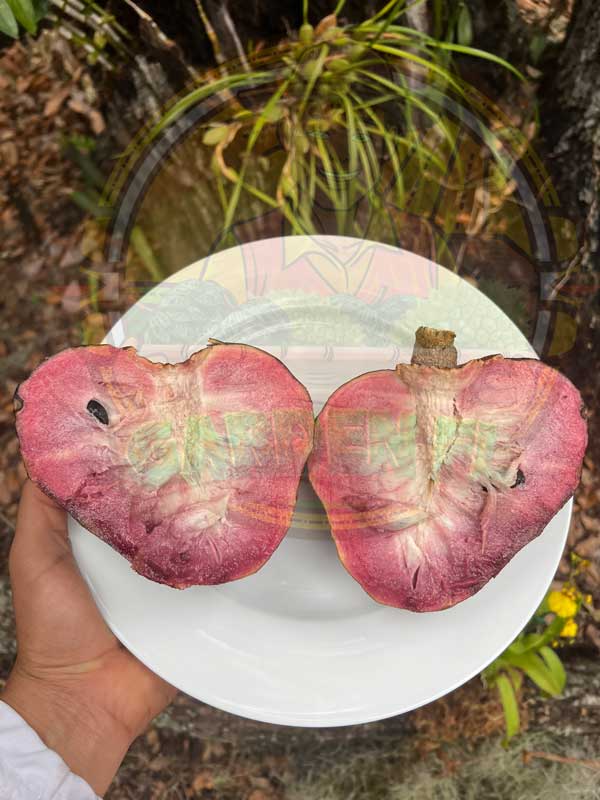
The custard apple is easily recognized inside because it has deep red to pink/white flesh.

The custard apple leaves are dark green and slender with a pointed tip. They are thinner than sugar apple (Annona squamosa) leaves.

Cherimoya

The bumps or points on the fruit quickly identify cherimoya fruits. 

Its skin can range from a dark to light green tone with prominent bumps and smooth scales depending on the cultivar of Cherimoya (Annona cherimola).

Cherimoya fruits can have a hybrid of both scales and points, which makes them easy to tell apart. The leaf on the cherimoya tree is very oval and large and is another easy way to distinguish them from the sugar and custard apple.

Cherimoya annona cherimola
Annona cherimola – Cherimoya fruit

The cherimoya fruit can be grown at higher elevations than the sugar apple (A. squamosa). 

The Cherimoya (A. cherimola) is known as ‘The sugar apple of the highlands’ as they can be grown from 2,300 ft to 7,900 ft above sea level. The sugar apple (A. squamosa) is grown better at lower elevations than cherimoya.

The cherimoya leaves on a cherimoya tree are oval-shaped and smooth to the touch, and the size of the leaf on a cherimoya (A. cherimola) is much larger than both custard apple (A.reticulata), and sugar apple (A. squamosa) leaves.

FAQs about Sugar apples, Custard apples, and Cherimoyas:

Q: Are sugar apples, custard apples, and cherimoyas good for you?

A: Yes, all three fruits are good for you. They are rich in vitamins, minerals, and fiber and can provide several health benefits. Sugar apples are a good source of vitamin C and fiber, while custard apples are high in potassium and vitamin A. Cherimoyas are rich in vitamin C, B6, and antioxidants.

Q: Can you eat the sugar apple, custard apple, and cherimoya seeds?

A: No, the seeds of these fruits are not edible and should be removed before consumption. They contain a toxic compound called annonacin, which can be harmful if consumed, so avoiding eating the skin and seeds of all Annonaceae fruits is a must.

Q: Where can you find the fruit of the sugar apple, custard apple, and cherimoya to buy?

A: You can find them in farmers’ markets like the Pinellas Farmers & Flea Market in Clearwater, Florida.

Conclusion:

In conclusion, sugar apples, custard apples, and cherimoyas are similar in many ways but also have distinct differences. 

While they all belong to the same family of plants and have a similar taste and texture, they vary in size, skin texture, and flavor. 

Knowing the differences between these fruits can help you choose the right one so you can grow them in your backyard garden and make sure everything is clear when shopping for them. 

So, next time you come across these tropical fruits, you will know which is which – try them out and see which is your favorite!

Recent Articles